
Research · Browse
By denomination
The coinage arranged by the coin it is, rather than by who struck it or where.
Only one denomination so far: every type catalogued to date is a billon denier. Gros, florins and later issues will appear here as the catalogue reaches them.
Deniers
The denier is the workhorse of medieval Lorraine money and, for the period covered here, effectively the only denomination. It is a small billon coin — silver heavily alloyed with copper — struck thin and often a little off-centre.
Weights are the most useful thing about it for dating purposes, because they drift. Ferry III’s early Nancy deniers sit at around 0.758 g; the horseman-and-shield group holds the same standard at roughly 0.729 to 0.758 g; the principal sword series spreads from about 0.59 to 0.76 g, wide enough to suggest a long production span and more than one striking campaign. Neufchâteau strikes lighter, at roughly 0.54 to 0.65 g, and Mirecourt lighter still, at about 0.43 to 0.54 g.
That downward drift across the reign is one of the few quantitative arguments available in a corpus otherwise dated by territorial transfers and stylistic comparison. It is worth treating as an argument from pattern rather than as a measurement: recorded weights come from individual specimens, and a worn or clipped coin weighs less for reasons that have nothing to do with the standard it was struck to.
-
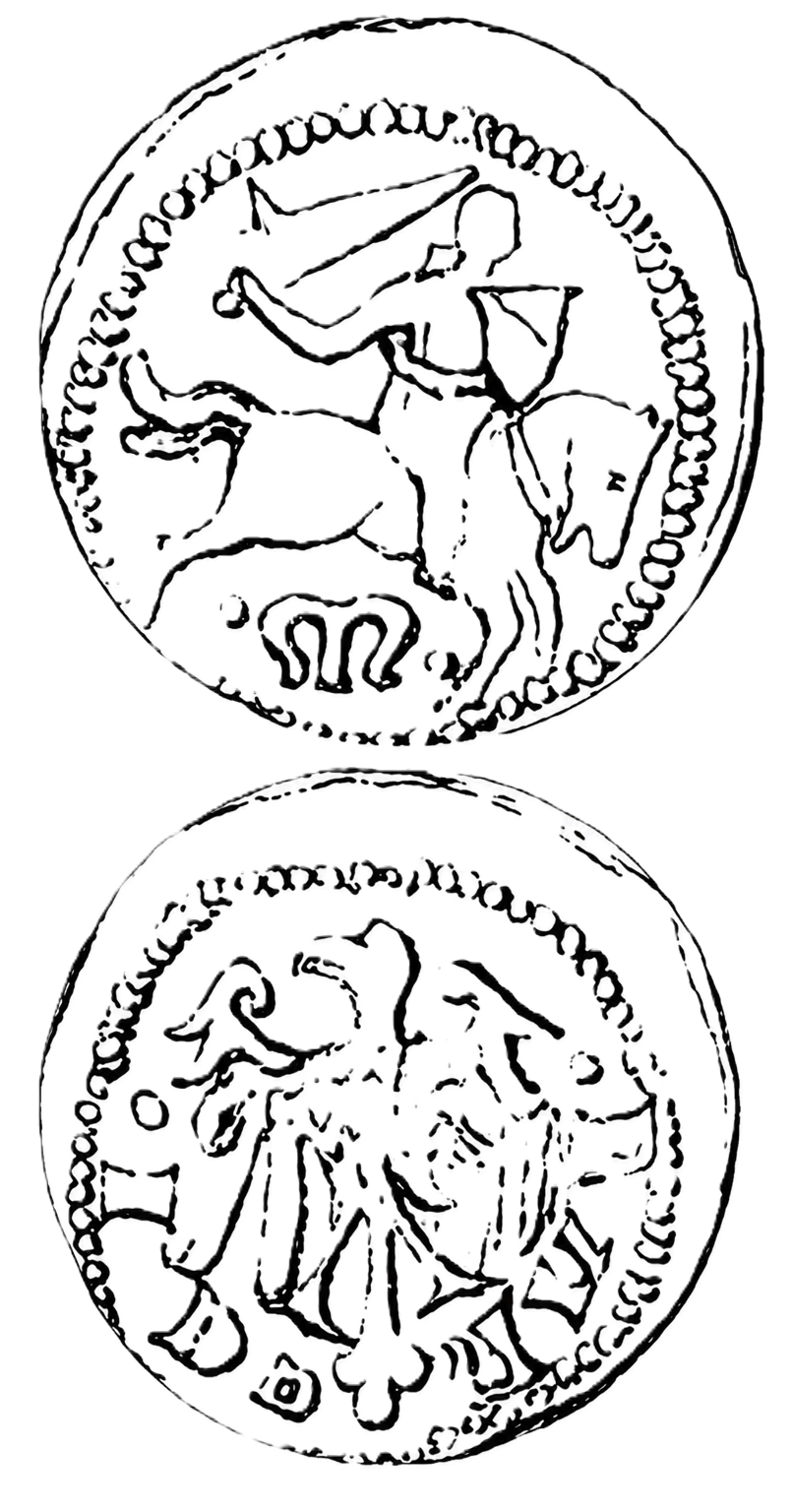
Denier of Nancy: horseman and eagle
The one Nancy issue whose attribution needs no scaffolding: an armed horseman with a Gothic M beneath, and an imperial eagle on the reverse. Highly various, as a mint working continuously for a quarter-century would be.
-
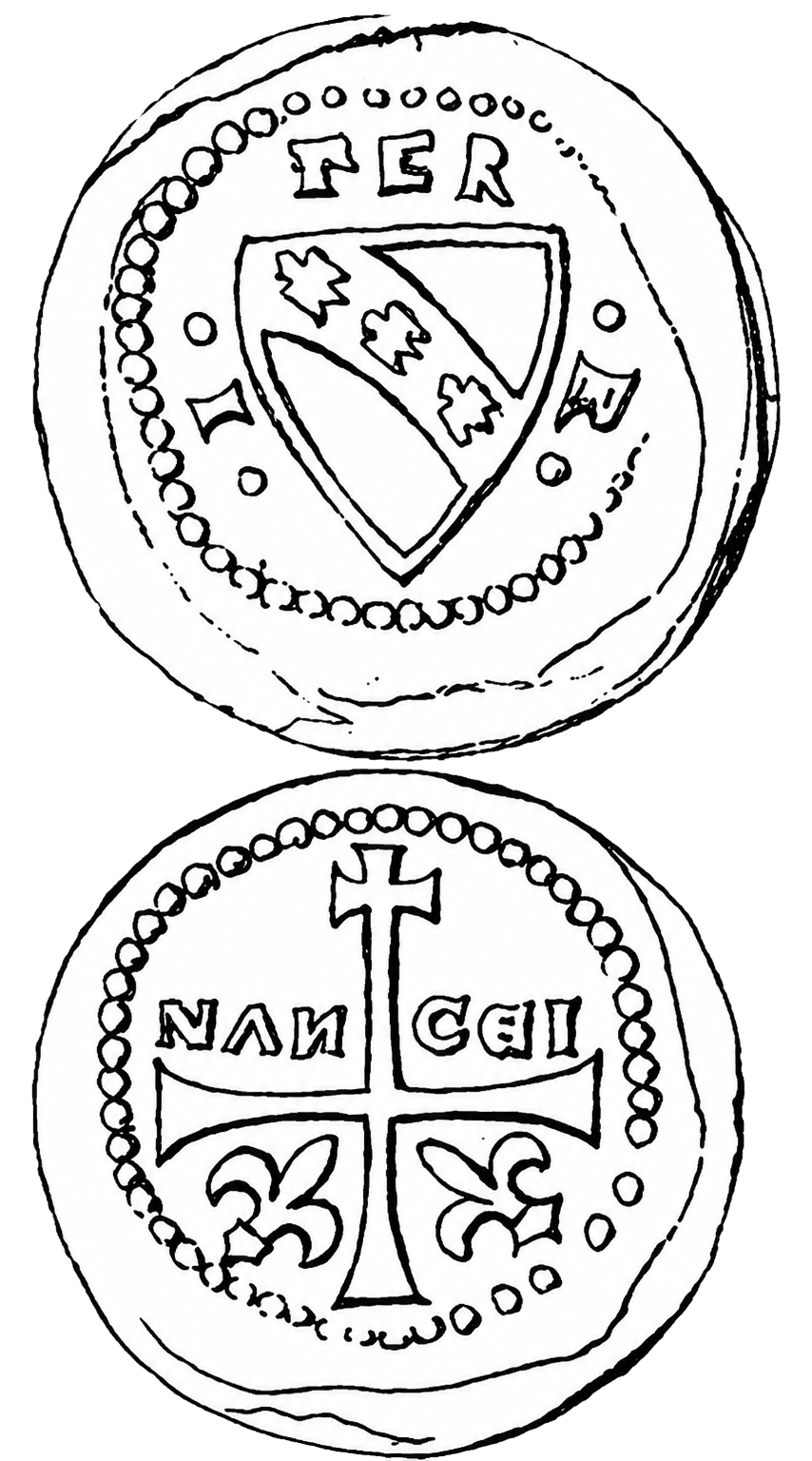
Denier of Nancy: FERRI above the shield
The earliest pieces conventionally given to Ferry III: his name above the shield of Lorraine, and a cross with fleurs-de-lis in the lower quarters. Light, thin, and usually struck a little off-centre.
-
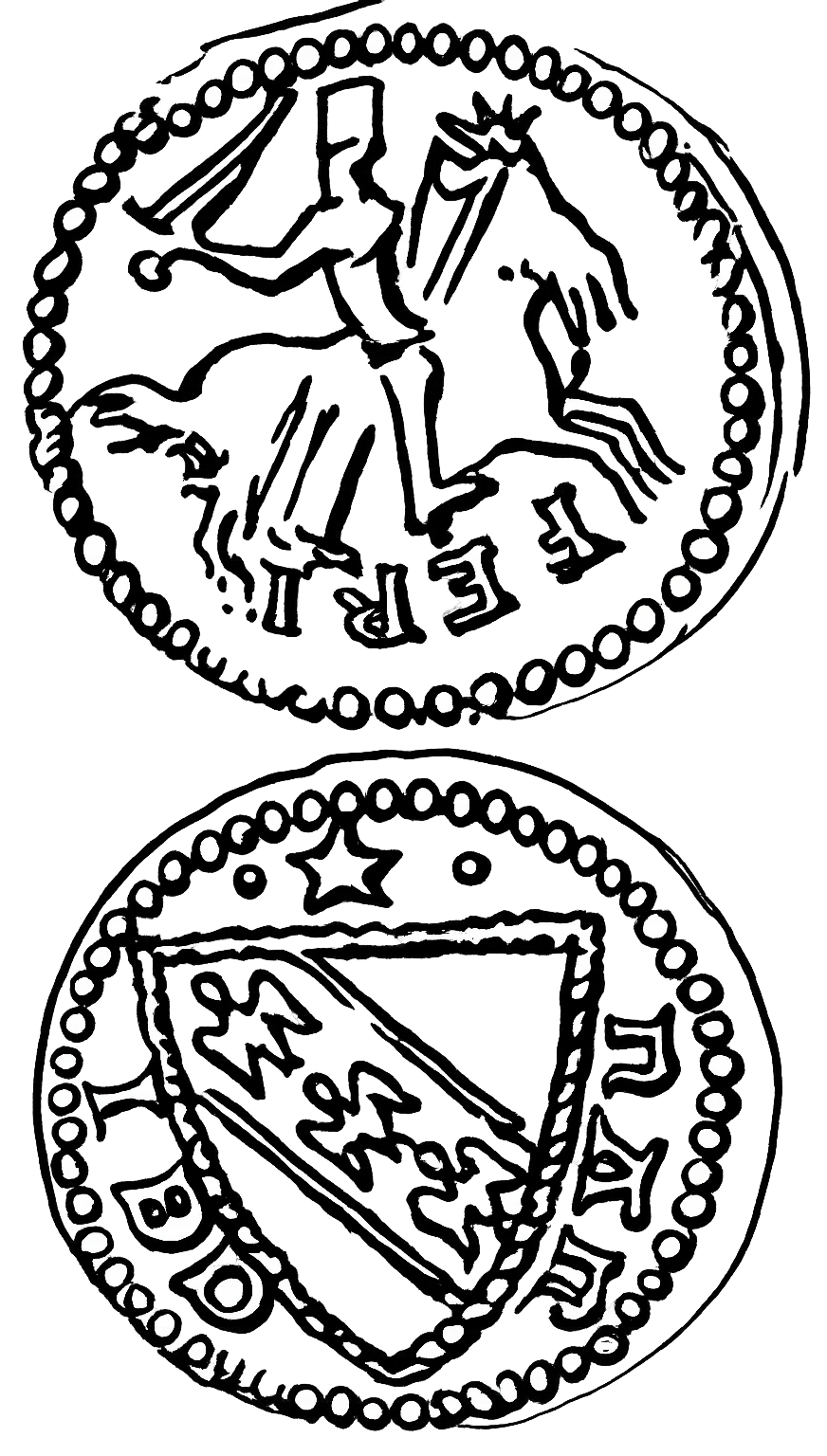
Denier of Nancy: horseman and shield
The visual change that would define Lorraine money for the rest of the medieval period: the static shield gives way to an armed horseman, and the shield migrates to the reverse.
-

Denier of Nancy: horseman, arm and sword
The principal type of the reign, struck over many years and surviving in a vast array of minor varieties. On many specimens the sword stands alone in the field, without the arm the series is named for.
-
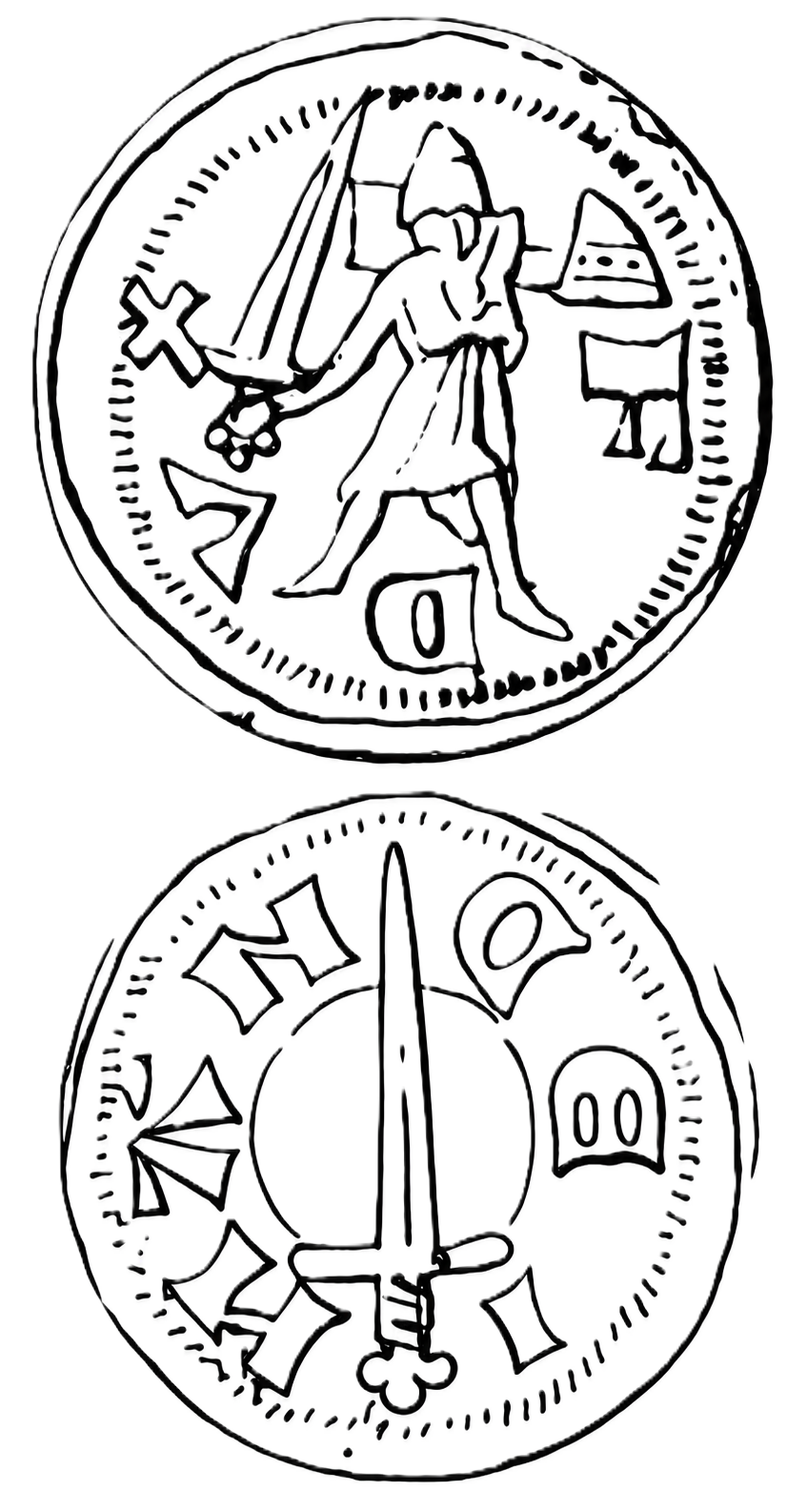
Denier of Nancy: the duke on foot
One type stands apart: the duke on foot, covering himself with his shield. Reassigned from Ferry IV on the evidence of a dated imitation, and placed at roughly 1300–1303.
-
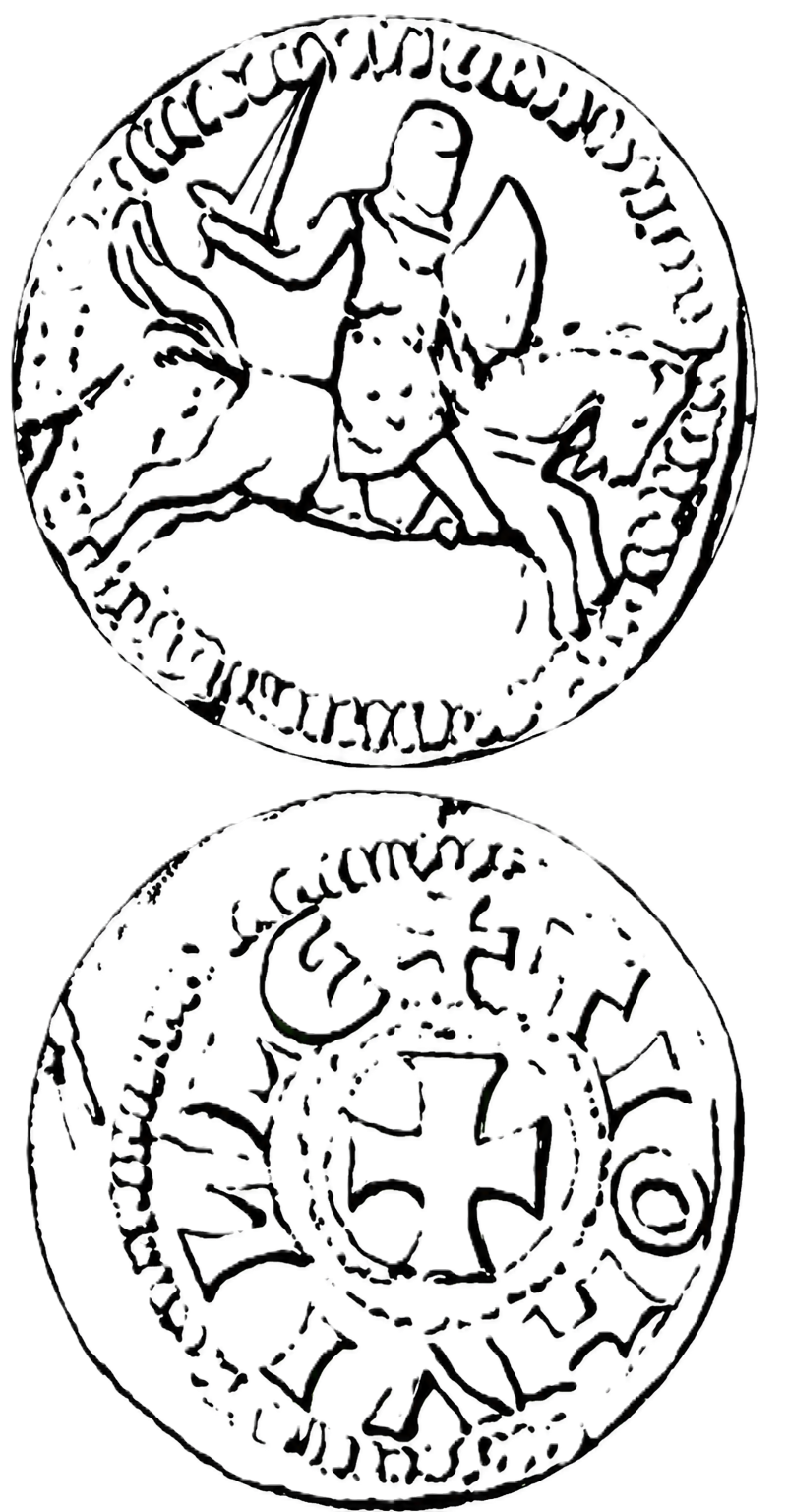
Denier of Thionville: horseman and cross
Among the rarest coins in the series, and the most precisely datable: struck during a possession lasting little more than a year, 1225–1226.
-
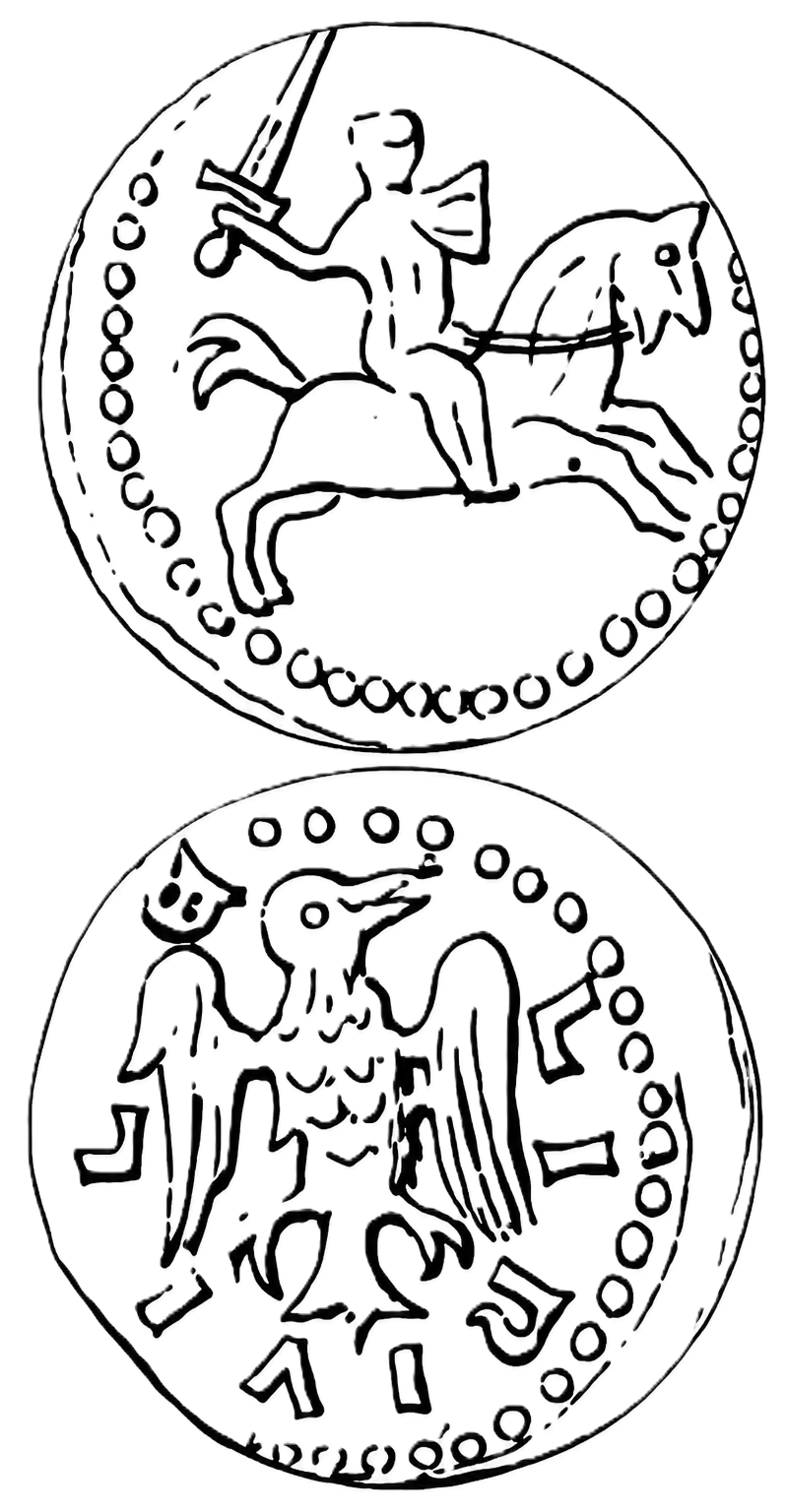
Denier of Lunéville: horseman and eagle
The galloping horseman covering himself with his shield, and a reverse recorded as LINIVIL or LINIVILE. The reading has occasionally been claimed for Ligniville rather than Lunéville.
-
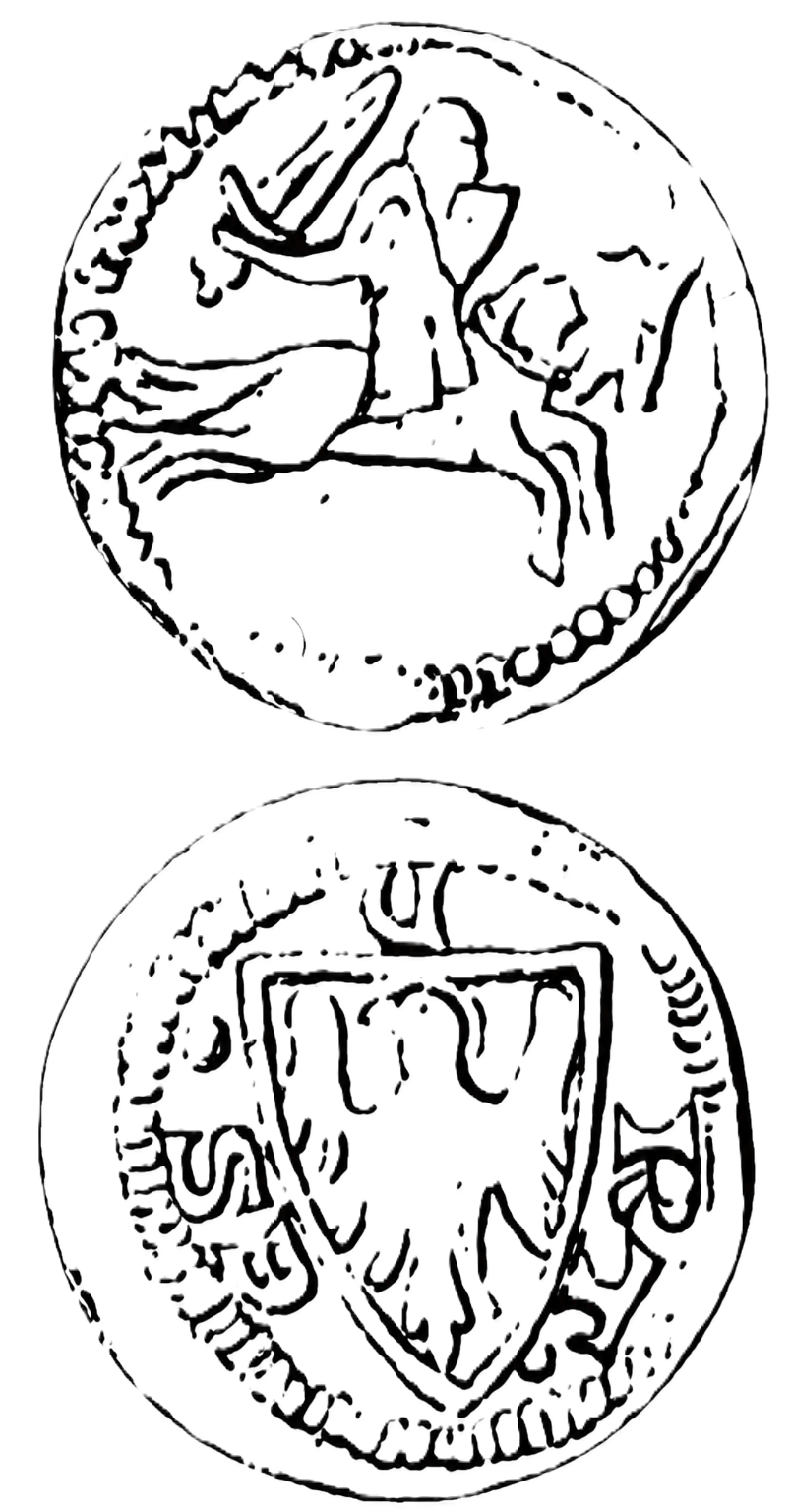
Denier of Sierck: horseman and eagle shield
An armed horseman galloping right, with a shield charged with an eagle on the reverse. Saulcy places it between Matthew II's ordinary coinage and the earliest issues of his son, at roughly 1247–1251.
-
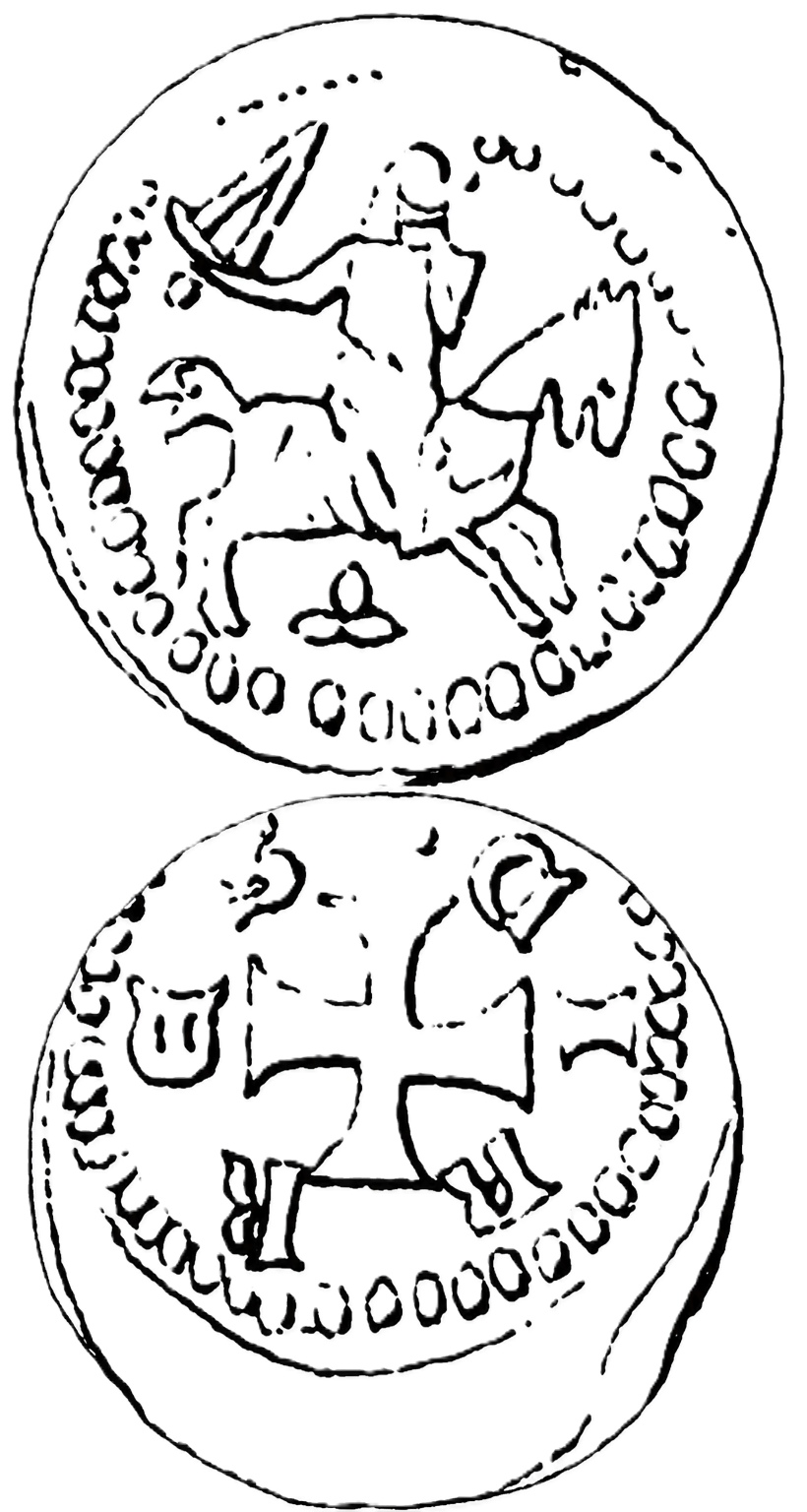
Denier of Sierck: horseman and cross pattée
The catalogue's central attribution dispute. Given to Matthew II by Saulcy and to Ferry III by modern catalogues, with neither side holding conclusive evidence. Recorded here as open.
-
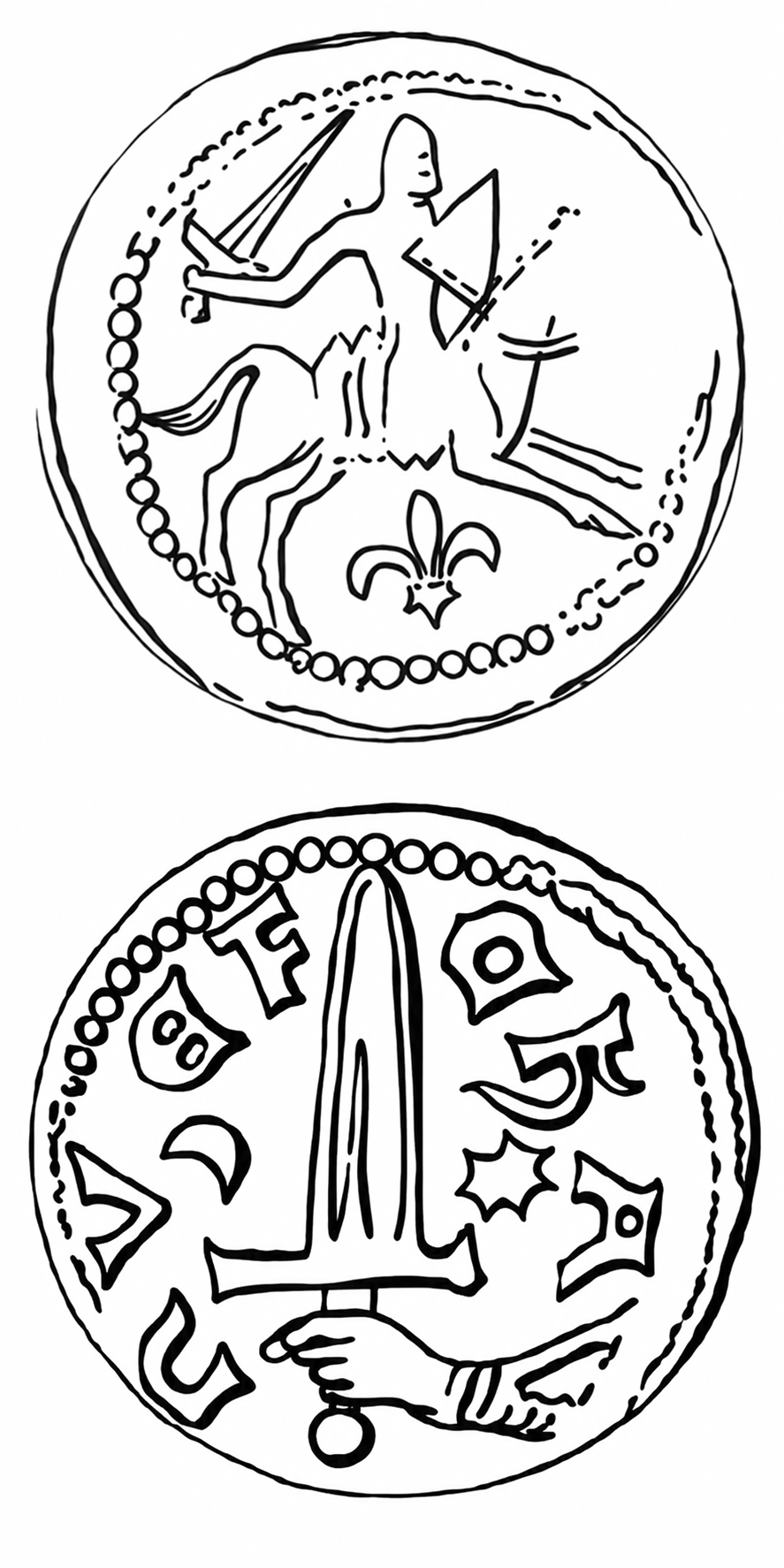
Denier of Neufchâteau: horseman, arm and sword
A close relative of the Nancy sword type, with a fleur-de-lis beneath the horse, struck on a noticeably lighter standard than its Nancy cousins.
-
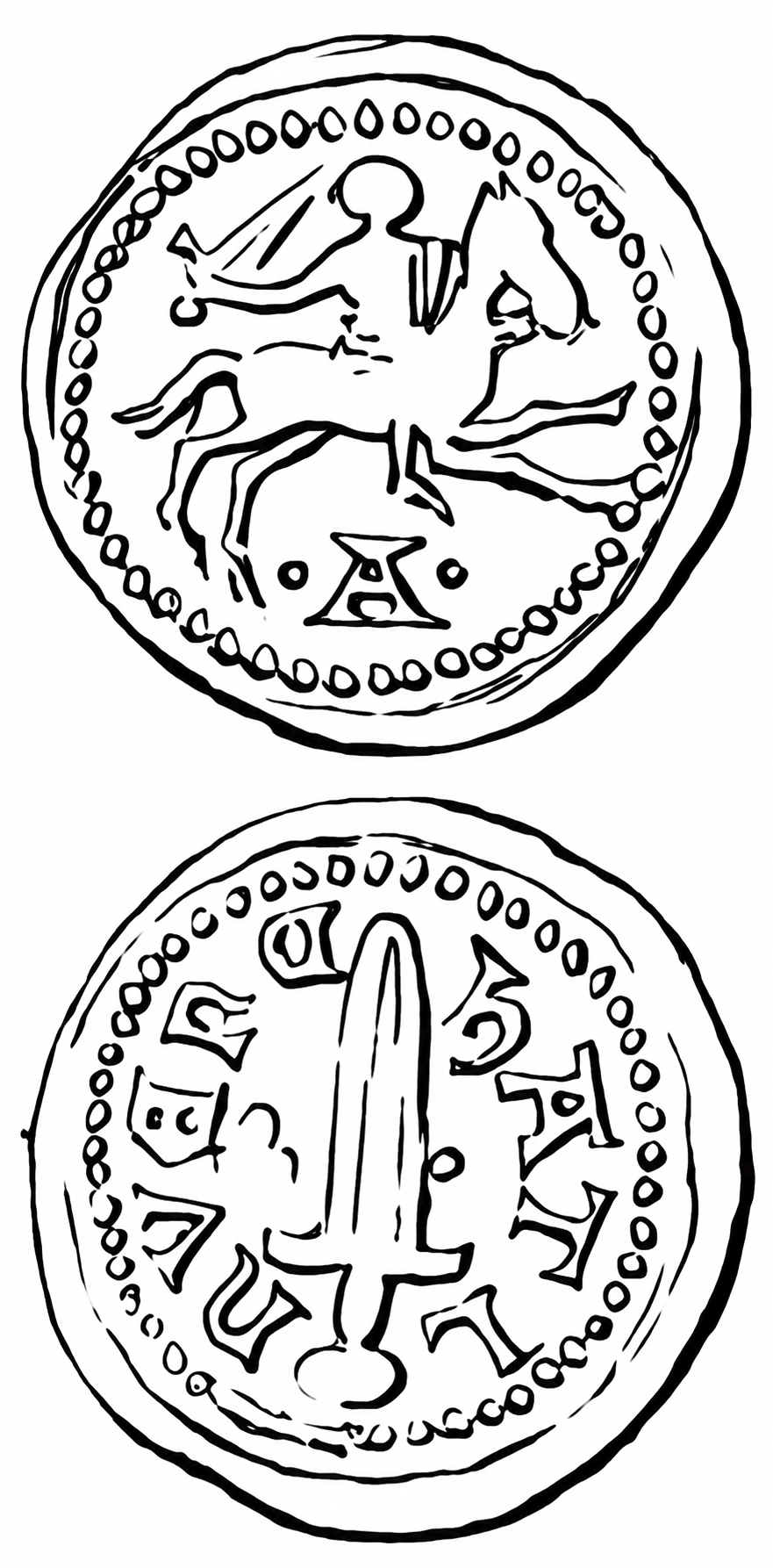
Denier of Neufchâteau: control mark A or AI
A distinct subseries replacing the fleur-de-lis beneath the horse with an A between dots, or the ligatured letters AI. The types are well attested; only the reading of the letters remains open.
-
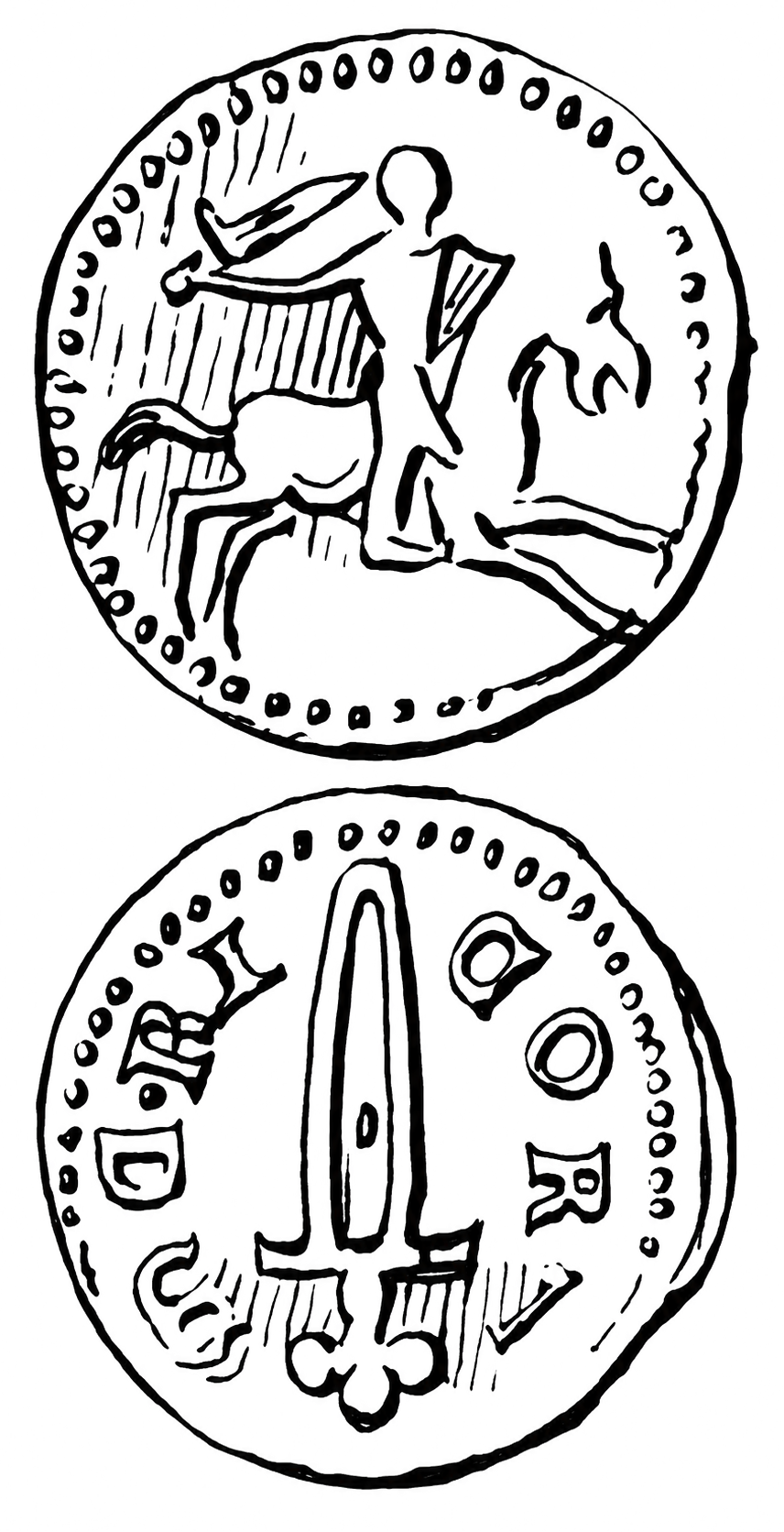
Denier of Mirecourt: horseman and sword
The lightest coins of the reign, following the established formula but with an unusually unstable reverse legend: MVRICORT, MERICORT, MYRICORT.