
Biography

Accession and restoration of authority
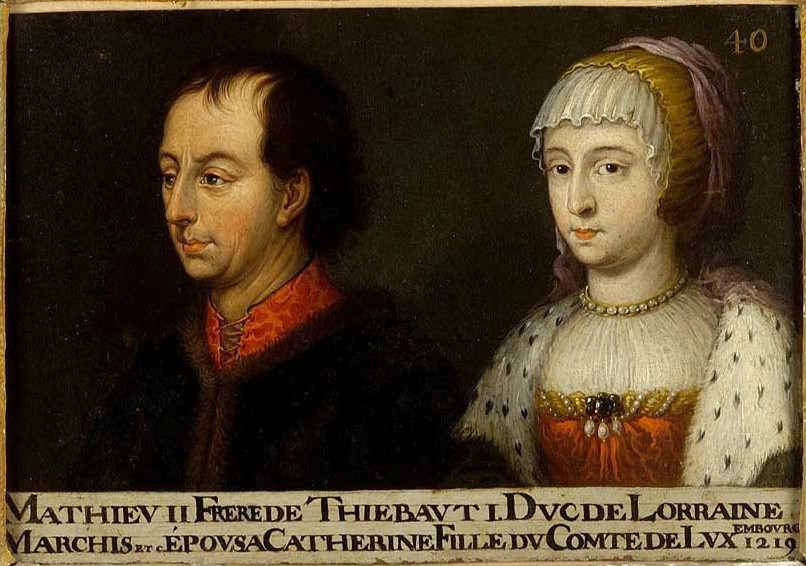
Matthew II was the younger son of Ferry II of Lorraine and Agnes of Bar. His accession came as a surprise: his elder brother, Thibaut I, died unexpectedly in 1220 at only twenty-nine, leaving a sixteen-year-old widow and no children, and the duchy passed to Matthew instead.
The Duchy of Lorraine was in a precarious state when Matthew assumed power. Thibaut’s short reign had not been successful: the duchy was weakened by internal disputes and strained relations with neighbouring powers, particularly with Henry II, Count of Bar, one of the most powerful barons of the region. Matthew set about restoring order — concluding peace treaties with neighbouring rulers and pacifying rebellious vassals. Soon afterwards, Agnes of Bar ceded several important fortresses to her son, returning to him the dowry she had received from Ferry II. The next significant step came in 1225, with Matthew’s marriage to Catherine of Limburg, daughter of Waleran III, Duke of Limburg and Count of Luxembourg. The alliance with one of the most influential nobles of the region strengthened Lorraine’s position on its eastern flank, and the marriage proved fruitful — producing several children, including the future Ferry III, who would succeed his father as Duke of Lorraine.
Conflict with Bar and Metz
Henry II of Bar remained a persistent threat. The catalyst for open hostilities was a separate conflict between the Counts of Champagne and Bar. In 1229, Matthew formed an alliance with the Count of Champagne directed against Henry; on learning of the coalition, Henry invaded Lorraine, while the allied forces — reinforced by contingents from Metz — launched a counter-strike. A truce was concluded a year later, and, as so often happened in those times, the former rivals were soon fighting shoulder to shoulder, this time on behalf of Bishop Jean d’Apremont, whom the citizens of Metz had expelled from the city and besieged in the Château de Saint-Germain. In 1232 the combined forces of the Duke of Lorraine, the Count of Bar, and the bishop laid siege to Metz, though unsuccessfully. Henry of Bar then withdrew from the coalition and resumed hostilities against Lorraine. The renewed war went badly for Matthew, who was compelled to seek peace; a new treaty was signed in 1233. The conflict was finally resolved in 1239, when Henry of Bar joined a fresh Crusade and perished on the expedition.
Matthew himself took the cross — swearing to join the Crusade — but there is no evidence that he ever did. Instead, he remained in his own domains, expanding their borders through a series of exchanges and acquisitions. Among the most consequential was the castle of Lunéville, added by exchange on 15 July 1243. The town’s position in the valley of the Meurthe allowed it to control trade routes towards Alsace and the Vosges.
Lorraine and the Empire
Matthew also played an active role within the Holy Roman Empire. In 1228 he accompanied Emperor Frederick II on the Sixth Crusade, and rejoined him in Italy in 1235. This allowed him to revive the alliance with the Empire that had been shattered by the war between his brother and Frederick. After Frederick was deposed by Pope Innocent IV at the Council of Lyon in 1245, Matthew supported the elections of Henry of Thuringia and then William of Holland as Kings of the Romans — effectively rival emperors. It is possible that this strong commitment to the papal cause was what secured his release from his crusading vow.
Towards the end of his reign, the Bishop of Strasbourg and the Count of Dagsburg invaded Lorraine. Matthew defeated them near Remiremont and pursued them so vigorously that they were forced to sue for peace. He died shortly afterwards, in 1251, leaving an underage son as his heir — though not before securing an advantageous marriage for him with the daughter of the Count of Champagne.
Part II
Coinage
NancyThionvilleLunévilleSierck
Types in brief
Catalogue data for the types attributed to this ruler. Fields absent from a record are omitted rather than estimated.
Denier of Nancy: horseman and eagle
- Denomination
- Denier
- Mint
- Nancy
- Attribution
- adopted
- Reverse legend
- NANCEI
Denier of Thionville: horseman and cross
- Denomination
- Denier
- Mint
- Thionville
- Attribution
- adopted
- Reverse legend
- TIONVILLE
Denier of Lunéville: horseman and eagle
- Denomination
- Denier
- Mint
- Lunéville
- Attribution
- adopted
- Reverse legend
- LINIVIL
- Weight
- 0.65 g (one recorded specimen)
Denier of Sierck: horseman and eagle shield
- Denomination
- Denier
- Mint
- Sierck
- Attribution
- adopted
- Reverse legend
- R CIRKES
- Reference
- Saulcy 3 (Pl. II)
Denier of Sierck: horseman and cross pattée
- Denomination
- Denier
- Mint
- Sierck
- Attribution
- contested
- Reverse legend
- .CIRKES
- Weight
- 0.6 g (one recorded specimen)
- References
- Boudeau 1455; Flon 51, 53 (pp. 297–298)
The coinage of Matthew II is a study in inference. Where a later duke will announce himself in the legend, the Lorraine denier of the first half of the thirteenth century is characteristically silent: a mounted knight on one face, an eagle or a cross on the other, and a place-name where a ruler’s name might have been. Initials appear from time to time, but a single Gothic letter is a weak witness, and the same letter can be made to serve several masters. The corpus of Matthew II has therefore been assembled the long way round — from the towns he acquired, the dates he acquired them, and the habit, well documented across his reign, of answering an acquisition with a coin.
That habit is the key to the whole arrangement, and it is worth stating plainly before the individual mints are taken up. Matthew II, duke from 1220 until his death in February 1251, was an active accumulator of territory: he inherited a duchy diminished by his brother’s dower obligations, spent thirty years repairing it, and left it materially larger. Sierck’s own local tradition records that its ducal mint was one of five operating during his reign. A striking at a newly acquired town was not primarily an economic act. It was a public statement of lordship, in the most widely circulated medium available, and it is what allows the numismatist to date coins that name no one.
Sierck
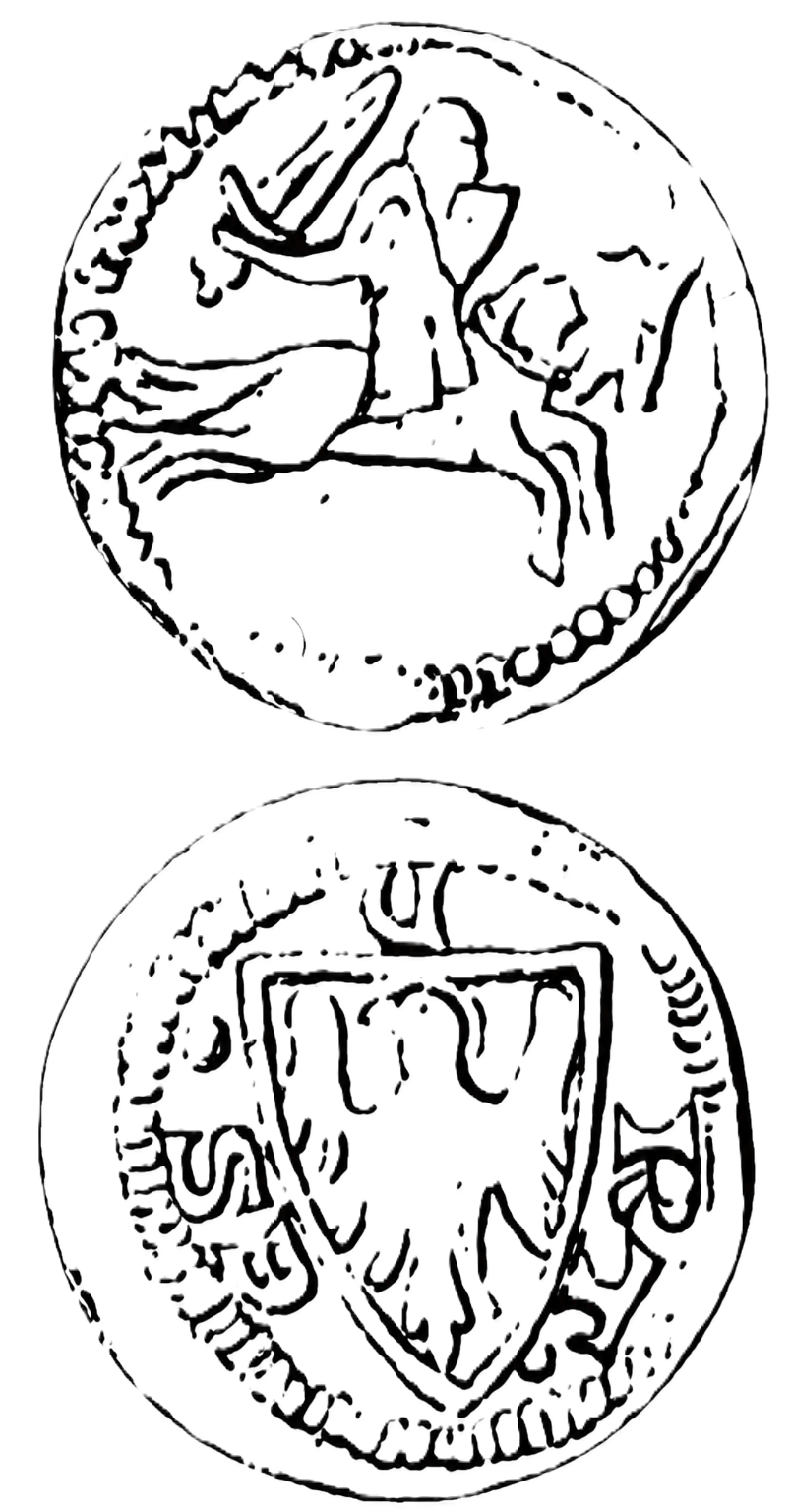
The most striking example is the coinage from Sierck. These deniers depict an armed horseman at a gallop, with the legend CIRKES on the reverse — an unambiguous reference to the town on the Moselle that came into the dukes’ possession in 1247 (an attribution proposed by de Saulcy and firmly established in cataloguing tradition). Since Matthew died in early 1251, any coins of this mint struck by him must belong to the final four years of his reign.
The hypothesis that minting began immediately after the town’s acquisition is well-founded, even if not documented; it relies on the common practice of the period, and there are no apparent reasons for a delay. All that can be stated with certainty is that a mint was established at Sierck Castle, producing several varieties of deniers — the scale of production points to a substantial workshop rather than a symbolic or trial issue.
Attribution note
Contested attribution
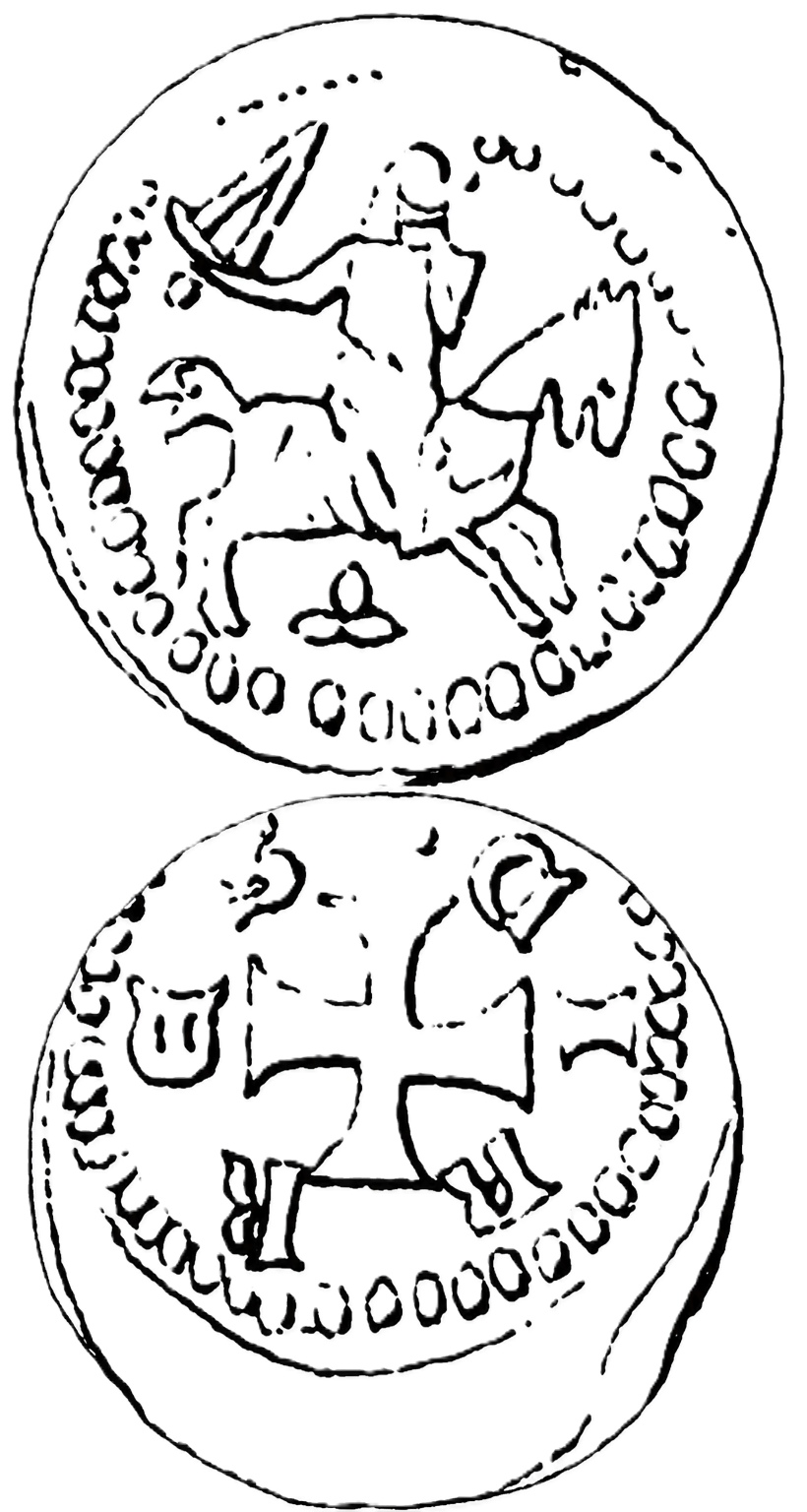
The Sierck coin series also represents a point of divergence between older and newer scholarship. De Saulcy attributed the deniers featuring the horseman and cross (an armed horseman galloping right, holding a shield; the reverse bearing the legend .CIRKES around a cross pattée with pellets in the angles) to Matthew II, based on the very arguments outlined above: the town passed to the duke in 1247, the duke minted coins in his new territories, and therefore this coin belongs to him. Modern catalogues take a different view. Flon assigns this type to the reign of Ferry III; in catalogues it appears under the numbers Boudeau 1455 and Flon 51, 53 (pp. 297–298) as a coin of Ferry III, weighing approximately 0.60 g. Today dealers classify it as a coin of the son rather than the father.
These conflicting views are telling, as neither side possesses conclusive evidence. The transfer of the town in 1247 serves merely as a terminus post quem (earliest possible date): it establishes only that the coin could not have been minted before that date, but it does not prove that it necessarily appeared before February 1251. Matthew had four years to organise minting operations; Ferry III had fifty-two, and we know that the mint at Sierck continued to operate under his rule as well. From a standpoint of probability, attributing the coin to the later period seems more justified; the style of the depiction points to this as well — the horseman here more closely resembles the imagery characteristic of Ferry III’s coinage than the horseman figure found on Nancy coins from the 1230s. De Saulcy presented historical arguments favouring a specific mint, yet failed to substantiate why the production of the series would have ceased precisely at the end of one duke’s reign or the other.
A later variety of this type features a shield bearing an eagle instead of the standard reverse design. Since the shield appears consistently on Ferry III’s early coins, specimens featuring the shield and eagle are generally considered transitional, linking the reigns of father and son. This conclusion rests on stylistic analysis and is therefore tentative; the discovery of a hoard could either confirm or refute it. For the moment, this remains the most logical explanation for a design that does not fit unequivocally into either reign.
Coins from Sierck were also counterfeited. A known forgery accurately copies the ducal type in general but contains an error in the legend (CIRTES instead of CIRKES) and betrays itself through the quality of the metal: it is low-grade billon or copper with a thin layer of silver.
Thionville
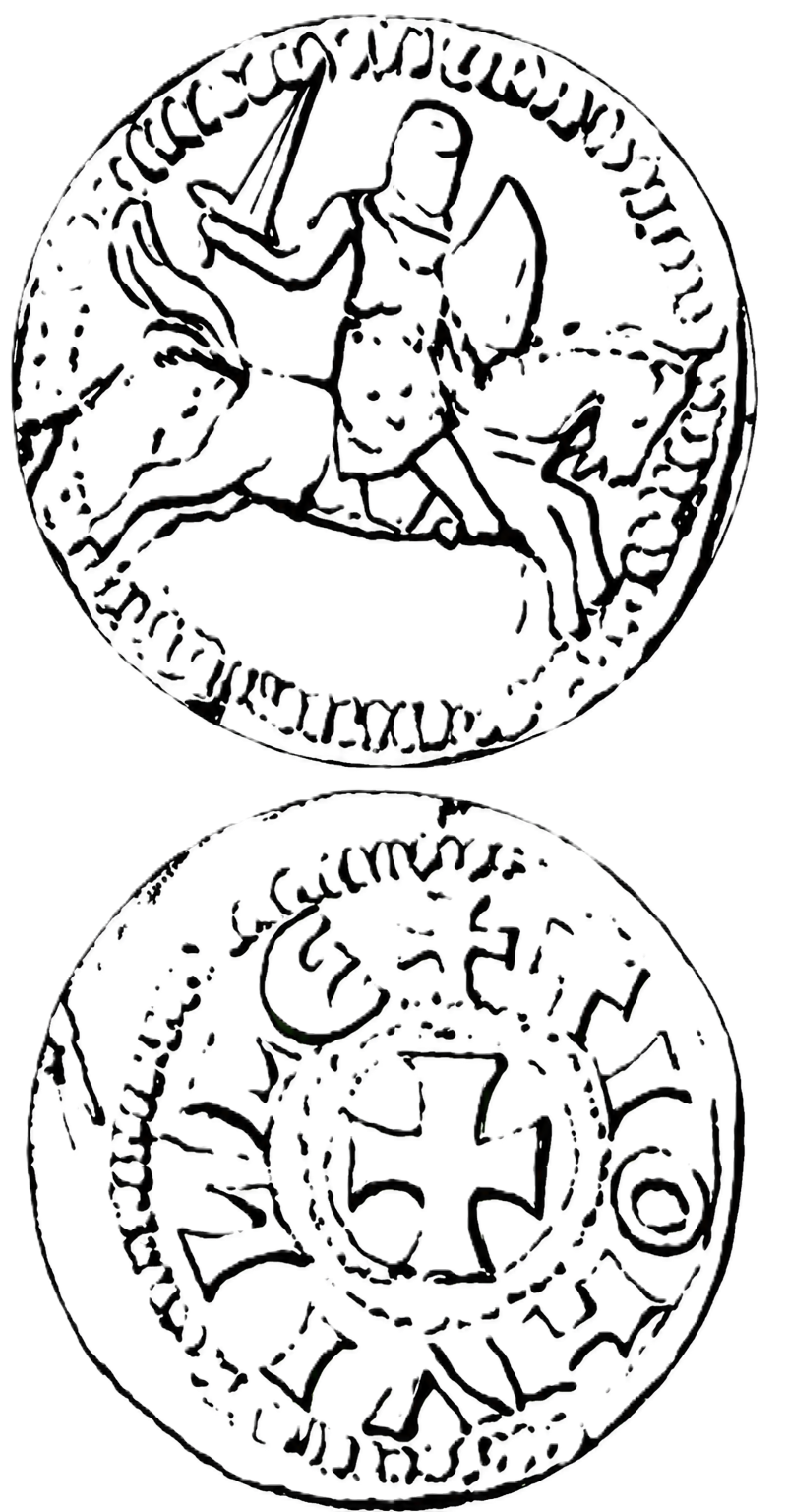
The Thionville episode is the briefest chapter of this reign and represents one of the rarest subjects in the numismatic collection. In 1225, Matthew married Catherine of Limburg — daughter of Waleran III of Limburg and Ermesinde, Countess of Luxembourg — a union that granted him access to Luxembourgish territories, including Thionville. However, it brought no financial gain. The lordship passed to Matthew along with the title but without the accompanying revenues; viewing the possession as a burden rather than an asset, he relinquished it almost immediately.
Nevertheless, he initiated coinage there. Deniers bearing the local legend TIONVILLE survive from this short period of ownership; since the timeframe is bounded by the dates of the marriage and the relinquishment of the lordship, these coins can be dated more precisely than almost any other issues of the reign: 1225–1226. This brief period of minting explains their rarity. It also sheds light on the duke’s priorities: coinage began immediately — precisely what one would expect if the minting was an act of asserting rights rather than a commercial venture.
Lunéville
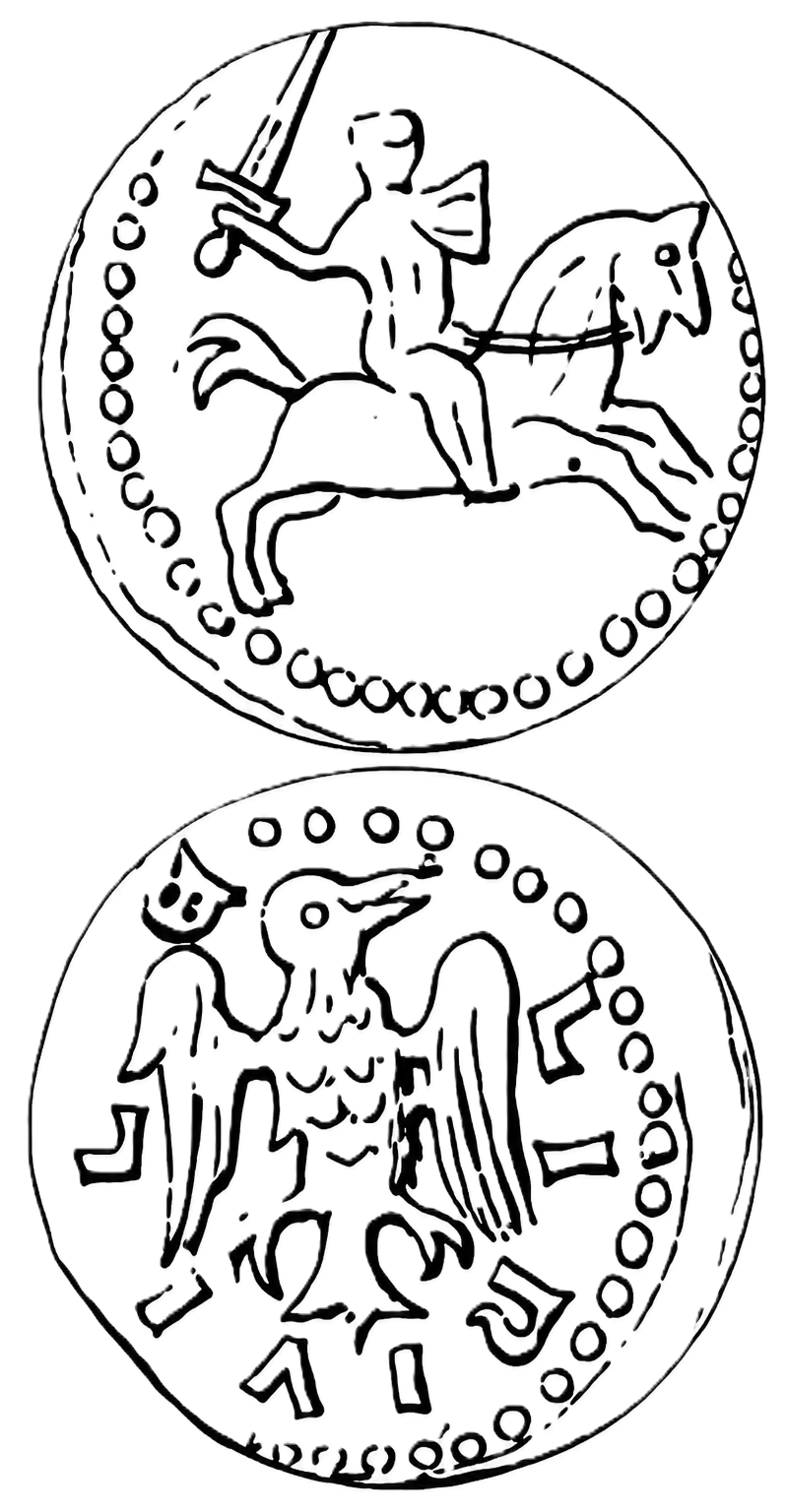
Lunéville came to the duchy by force. Hugues II, Count of Lunéville, spent his years in conflict with Matthew, was defeated, and surrendered his county; an exchange of lands settled the matter, and the lordship and its castle entered the ducal domain in 1243.
A denier survives that fits the moment. It shows the familiar galloping horseman, here covering himself with his shield, and a reverse legend recorded in sale descriptions as LINIVIL or LINIVILE, accompanied on some readings by an imperial eagle; a cited specimen weighs 0.65 g. The name has occasionally been claimed for Ligniville, and the possibility cannot be dismissed outright — medieval mint legends are abbreviated to the point of ambiguity. But Lunéville is much the better candidate. It was acquired at a datable moment, it was a place of real consequence with a fortress the dukes would occupy for the rest of the Middle Ages, and it fits the established pattern: a new possession, promptly announced in silver.
Nancy
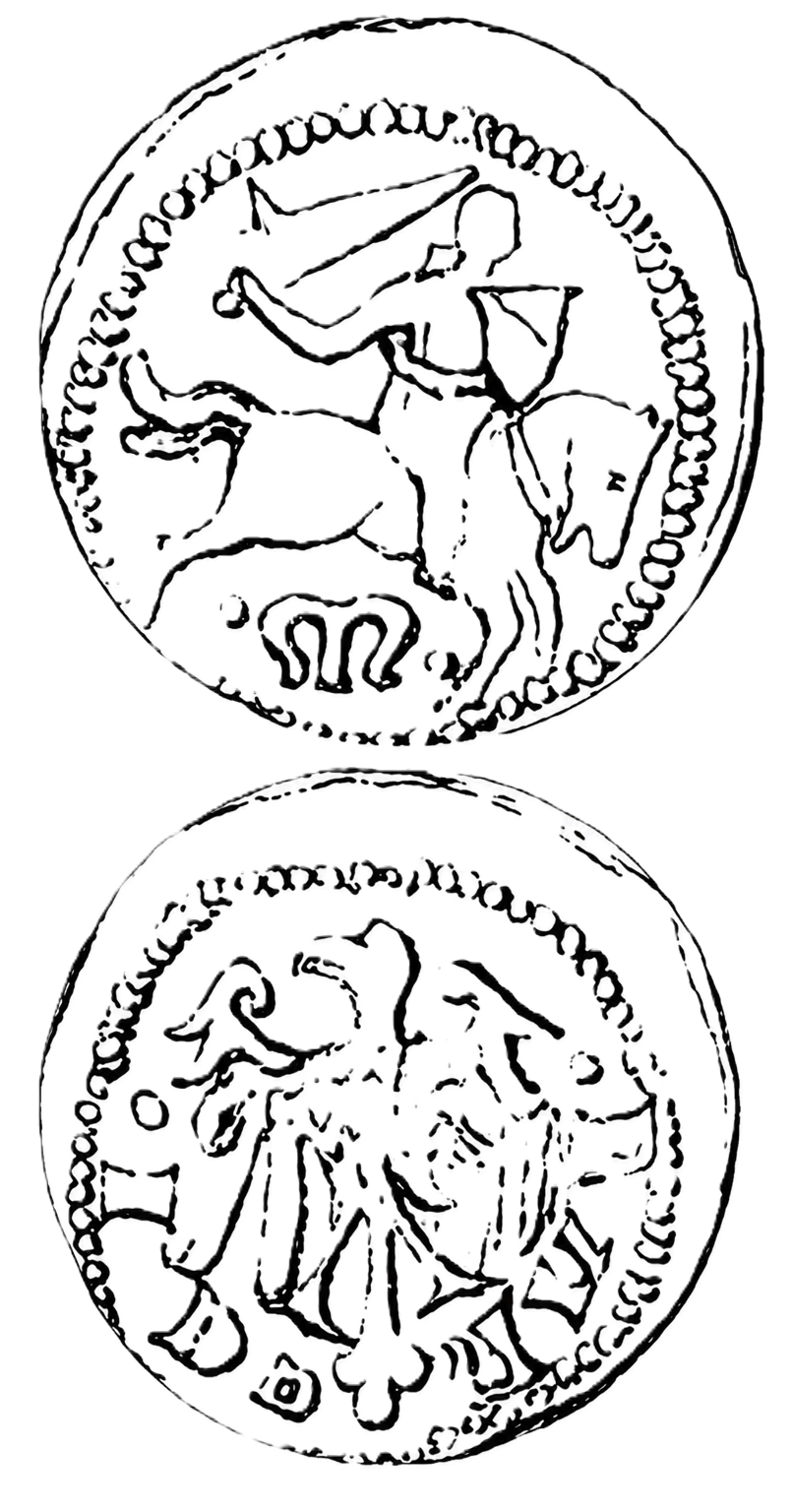
Nancy is the one mint whose attribution needs no scaffolding. The deniers show an armed horseman on the obverse and an imperial eagle with the legend NANCEI on the reverse, and a number of varieties carry a Gothic M beneath the horse — universally read as an abbreviation of Mahus, the vernacular form of the duke’s name. Here, for once, the coin speaks.
The Nancy issues are also the most various. Symbols beneath the horse shift from one striking to the next; the reverse legend appears in abbreviated, blundered and irregular forms; letter shapes drift. This is the ordinary signature of a mint working continuously over many years rather than in a single campaign, and Nancy had reason to work: the town had been assigned as dower to Matthew’s widowed sister-in-law Gertrude de Dagsbourg on his accession and returned to the duchy on her death in 1225, leaving the duke a full quarter-century of undisturbed possession.
The eagle invites more comment than it can safely support. Matthew was a close associate of the Emperor Frederick II — he accompanied him on crusade and into Italy in 1235, and broke with him only in 1247, when he undertook to the Church to oppose the Hohenstaufen party. It is tempting to read the eagle as a partisan badge and to date by it. The temptation should be resisted. The imperial eagle is a common motif on Lorraine and Rhineland money of the period, it expresses a general fact about the duchy’s place within the Empire, and it appears on issues that cannot be aligned with the shifts in Matthew’s politics.