
Biography
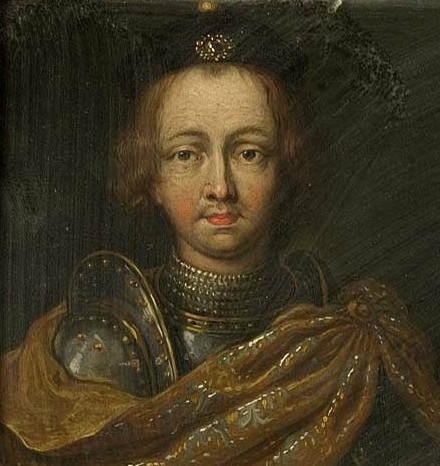

The reign of Ferry III of Lorraine marks a period of relative political stability and gradual institutional consolidation in the history of the Duchy of Lorraine. Succeeding his father, Matthew II of Lorraine, at the age of twelve, Ferry initially ruled under the regency of his mother, Catherine of Limburg, whose governance ensured continuity during his minority. The regency lasted three years, and upon reaching the age of fifteen Ferry began to rule in his own right. Catherine’s death in June 1255, shortly before her son’s marriage, marked the end of this transitional phase and the beginning of Ferry’s personal rule.
In the same year, Ferry III married Margaret of Champagne, daughter of Theobald I of Navarre. Although the marriage brought no immediate territorial expansion, it significantly strengthened the duchy’s dynastic prestige and diplomatic position by linking Lorraine to one of the most powerful and influential principalities of thirteenth-century France. Together, these early circumstances — an orderly regency, a timely assumption of power, and a strategically advantageous marriage — provided the stable foundation upon which Ferry III would pursue policies of urban development, economic reorganisation, and cautious political balancing between the Kingdom of France and the Holy Roman Empire.
Ferry began his reign by promoting urban privileges, granting communal charters to a number of towns under the Law of Beaumont.1 This policy strengthened ducal authority in urban centres while reshaping relations between the duke and the nobility. It inevitably generated discontent among certain barons, who perceived the expansion of communal liberties as an encroachment upon their traditional rights.
Later historians claimed that this resistance culminated in Ferry’s abduction and imprisonment in the tower of Maxéville near Nancy; modern scholarship, however, treats the detailed narrative of a prolonged “captivity at Maxéville” as exaggerated and largely shaped by later retellings. Whether or not a brief episode of coercion occurred, Ferry’s response to noble opposition was not armed repression but a gradual rebalancing of power in favour of the ducal administration. He confirmed baronial privileges while continuing to extend the Law of Beaumont. It is particularly noteworthy that Ferry did not try to resolve this internal opposition through direct military confrontation. Instead, he relied primarily on legal and economic instruments to weaken baronial influence: the confirmation of communal liberties, the encouragement of urban self-government, and the redirection of revenues and judicial authority towards ducal-controlled towns.
The Counts of Vaudémont provide a particularly clear illustration of the long-term effects of this policy. Their power rested heavily on local judicial rights, tolls, and market revenues rather than on territorial sovereignty. As Beaumont-law towns expanded within and around their sphere of influence, ducal justice and fixed communal dues increasingly replaced seigneurial courts and customary exactions. Although the Vaudémont lineage survived, historians note a gradual loss of political autonomy and regional influence during the later thirteenth century, as the counts appear less frequently as independent actors and more often as parties to ducal arbitration or settlement.2
As is well known, the Duchy of Lorraine formally belonged to the Holy Roman Empire. Like other princes of the western part of the Empire, Ferry was forced to operate in a complex political environment where imperial legitimacy, regional autonomy, and relations with the French crown were closely intertwined.
Ferry III’s reign began at a time when imperial power was greatly weakened after the death of Frederick II in 1250. This period of interregnum was characterised by disputes over the crown of the Holy Roman Empire, opposition from the papacy, and the de facto autonomy of regional princes.
It is well known that in 1258 Ferry III travelled to the Iberian Peninsula, where he received investiture of the Duchy of Lorraine from Alfonso X of Castile and León.
The following account of Ferry’s involvement in the imperial election and his journey to Spain is summarised from Henry Bogdan’s La Lorraine des ducs.3
Despite his youth, Ferry was deeply involved from the beginning of his reign in the political struggles of the Holy Roman Empire. Following the death of William of Holland in 1256, the imperial princes met in 1257 to elect a new King of the Romans. Although Ferry III was not formally a member of the electoral college, he became actively involved in the contest and supported the candidacy of Alfonso X.
Ferry’s support may have been influenced by Alfonso’s connection to the Hohenstaufen dynasty. Alfonso’s mother, Beatrice of Swabia, was a daughter of Philip of Swabia and therefore a first cousin of Emperor Frederick II. Through her, Alfonso belonged to the wider Hohenstaufen family, to which the dukes of Lorraine had traditionally remained loyal.
The election was disputed. One group of electors chose Alfonso, while another supported Richard of Cornwall. Ferry personally travelled to Alfonso’s court to inform him of his election as King of the Romans. On 14 March 1258, at Toledo, he reportedly swore homage to Alfonso and received from him the formal investiture of the Duchy of Lorraine. He was also granted a dignity commonly designated in later sources as marchis,4 an honorary imperial title associated with judicial authority and symbolically represented by a drawn sword.
According to tradition, Ferry III stopped at the hospital of Roncesvalles both on his journey to Spain and on his return and later made a bequest to the institution. This story was perhaps connected with an older Lorraine tradition tracing the ancestry of the ducal house to Garin le Loherain, the legendary hero of the medieval epic cycle known as the Lorrains. Over time, this tradition may have become associated with the more famous legend of Roland and the destruction of Charlemagne’s rearguard at Roncesvalles in 778.
Under the restored imperial authority of Rudolf I of Habsburg, Ferry maintained active relations with the imperial court. His presence at the meeting held at Lausanne in 1275, where Rudolf I negotiated with the papacy, attests to his participation in the political life of the Empire. Such involvement enhanced Ferry’s prestige and reinforced the status of Lorraine as an imperial principality rather than a peripheral lordship.
These imperial connections carried important symbolic weight. Ferry attached considerable importance to the dignity of marchis as a marker of his standing within the Empire. Its emblem, the drawn sword, became a prominent element of ducal representation and left a lasting imprint on Lorraine’s political symbolism, most visibly in coinage, where the sword appears as a recurring sign of authority.
Formal membership in the Empire did not prevent Ferry from pursuing an independent and pragmatic foreign policy. His alliances shifted according to circumstances, particularly in conflicts involving neighbouring princes, bishops, and counts. While the Empire provided a framework of legitimacy and arbitration, it did not dictate a rigid course of action. This flexibility is clearly illustrated by Ferry’s alignment with Philip IV of France against Edward I of England, whom Emperor Rudolf I supported. Philip’s eventual success strengthened Ferry’s position in regional power struggles, particularly in relation to the County of Bar, contributing over time to the consolidation of ducal authority.
It would be misleading to portray Ferry III solely as a diplomat and administrator. Like most territorial princes of his time, he exercised power within a political culture in which limited armed conflict between neighbouring lords was a regular and accepted part of governance. Although Lorraine was not engaged in prolonged or large-scale wars during his reign, military confrontations with neighbouring powers occurred with some frequency and formed part of the ordinary management of regional rivalries.
Relations with the Counts of Bar and the bishops of Metz illustrate this pattern. These neighbours were alternately allies and adversaries, depending on circumstances. Around 1258, Ferry ordered the construction of a fortress above Frouard in response to pressures from both Bar and Metz. Yet only a few years later he provided military assistance to Philip of Florenge, Bishop of Metz, in his conflict with the Counts of Vaudémont and Salm. This cooperation proved temporary. Disputes over interests and obligations soon led to renewed hostilities, during which ducal forces ravaged episcopal lands.
The Count of Bar then intervened in support of Philip of Florenge, but after an unsuccessful attempt to besiege Prény, Ferry’s principal residence, he was compelled to negotiate peace. In a further reversal characteristic of thirteenth-century politics, Ferry and the Count of Bar subsequently acted together to seek the annulment of Philip’s episcopal election. Their efforts resulted in the installation of William of Traisnel, nephew of the Count of Bar, on the episcopal throne of Metz.
A similar pattern emerged in 1267, when a dispute between the Counts of Luxembourg and Bar drew Lorraine into renewed conflict. Ferry suffered several military setbacks, first while supporting Luxembourg and the Bishop of Metz, and shortly thereafter while allied with the Count of Bar against former partners. Such rapid shifts of allegiance were not exceptional, but reflected the flexible and pragmatic nature of feudal politics in the region.
Shortly thereafter, Ferry entered into another conflict with Laurent, Bishop of Metz. On this occasion, the Count of Bar supported the Duke of Lorraine, and their combined forces defeated the episcopal army. Laurent and several of his allies were taken prisoner, and peace was restored only through the mediation of Pope Gregory X, underscoring both the intensity of these disputes and the role of ecclesiastical authority in limiting their escalation.
In 1298, Ferry III, who despite his alignment with Philip IV of France had thus far preserved workable relations with the emperor, openly shifted his position by supporting the challenge of Albert of Austria. When Albert secured the imperial throne, he rewarded Ferry for his support with a series of privileges. Among these was a concession concerning the striking of coinage at a place referred to in the imperial act as Yve, commonly identified — though not without uncertainty — with Carignan. Modern scholarship generally interprets this grant not as the creation of a new regalian right, but as a confirmation intended to regulate the circulation of ducal coinage within the imperial framework.
In 1299, Vaucouleurs became the site of a prominent meeting between Albert of Austria and Philip IV. In his capacity as marchis, Ferry accompanied the emperor as far as Toul, where illness compelled him to return to Nancy and prevented his participation in the formal celebrations marking the assembly of princes. Ferry’s eldest son, Thibaut II of Lorraine, then Lord of Rumigny, represented his father at the gathering.
After a reign of fifty-two years, characterised by sustained efforts to consolidate ducal authority amid shifting regional and imperial politics, Ferry III died at Nancy on 31 December 1303. He was succeeded by his son Thibaut II, to whom the ducal title passed without contest.
The reign of Ferry III represents a decisive phase in the consolidation of ducal authority in Lorraine. Governing during a period marked by weakened imperial power, fluid alliances, and frequent local conflict, Ferry combined institutional reform, symbolic assertion of authority, and pragmatic diplomacy to strengthen his position. His promotion of communal liberties, careful use of military force, and selective engagement with both imperial and Capetian powers reflect a style of rule grounded less in conquest than in negotiation and adaptation. Although his reign did not resolve all structural tensions — particularly with neighbouring ecclesiastical and secular powers — it established durable political and institutional foundations that shaped the duchy’s development well into the fourteenth century.
Notes
-
Beaumont-law towns were towns granted a specific form of municipal charter based on the Law of Beaumont (loi de Beaumont), first formulated at Beaumont-en-Argonne in the twelfth century. This legal model provided towns with a defined set of liberties, including self-government by elected magistrates, independent local courts for minor cases, regulated taxation, and collective responsibility for dues owed to the lord. In exchange, the town paid fixed rents and acknowledged the lord’s sovereignty. ↩
-
On the institutional weakening of baronial power through the expansion of communal liberties in Lorraine, see M. Parisse, La noblesse lorraine (XIe–XIIIe siècles), esp. pp. xxx–xxx;
J. Schneider, La loi de Beaumont et les franchises communales en Lorraine; cf. also Dom A. Calmet, Histoire de la Lorraine, vol. II, for contemporary charter evidence. ↩
-
H. Bogdan, La Lorraine des ducs, Tempus 515 (Paris: Perrin, 2013), Kindle edition, ch. “Les progrès de l’influence française en Lorraine sous Ferri III (1251–1303)”; first published as La Lorraine des ducs: sept siècles d’histoire (Paris: Perrin, 2005).
↩ -
The title marchis (Latin marchio) associated with Ferry III of Lorraine should not be understood as a territorial margraviate in the later medieval sense. In the western regions of the Holy Roman Empire during the mid-thirteenth century, the term could designate a personal or honorary imperial dignity rather than a clearly defined administrative office. In the Lorraine context, marchis is best interpreted as a title linked to judicial authority and the maintenance of public order, sometimes rendered in later tradition as grand voyer. Its emblematic attribute, the drawn or “naked” sword, symbolised the exercise of high justice and imperial authority rather than control over frontier territories or roads in a strict administrative sense. The dignity does not appear to have been hereditary, nor did it confer autonomous territorial rights; its importance lay chiefly in its symbolic value, particularly during the Interregnum, when imperial legitimacy was fragmented and such markers of authority carried enhanced political weight. ↩
Part II
Coinage
NancySierckNeufchâteauMirecourt
Types in brief
Catalogue data for the types attributed to this ruler. Fields absent from a record are omitted rather than estimated.
Denier of Nancy: FERRI above the shield
- Denomination
- Denier
- Mint
- Nancy
- Attribution
- adopted
- Obverse legend
- FERRI
- Reverse legend
- NANCEI
- Weight
- 0.758 g (one recorded specimen)
Denier of Nancy: horseman and shield
- Denomination
- Denier
- Mint
- Nancy
- Attribution
- adopted
- Reverse legend
- NENCEI
- Weight
- 0.729–0.758 g (recorded range)
Denier of Nancy: horseman, arm and sword
- Denomination
- Denier
- Mint
- Nancy
- Attribution
- adopted
- Obverse legend
- FERI
- Reverse legend
- NANCEI
- Weight
- 0.59–0.76 g (recorded range)
Denier of Nancy: the duke on foot
- Denomination
- Denier
- Mint
- Nancy
- Attribution
- adopted
- Obverse legend
- F. DVX
- Reverse legend
- NANCEI
- Weight
- 0.459 g (one recorded specimen)
- References
- Boudeau 1459; Roberts 9211
Denier of Sierck: horseman and cross pattée
- Denomination
- Denier
- Mint
- Sierck
- Attribution
- contested
- Reverse legend
- .CIRKES
- Weight
- 0.6 g (one recorded specimen)
- References
- Boudeau 1455; Flon 51, 53 (pp. 297–298)
Denier of Neufchâteau: horseman, arm and sword
- Denomination
- Denier
- Mint
- Neufchâteau
- Attribution
- adopted
- Reverse legend
- NVEFCHA
- Weight
- 0.54–0.65 g (recorded range)
Denier of Neufchâteau: control mark A or AI
- Denomination
- Denier
- Mint
- Neufchâteau
- Attribution
- adopted
- Reverse legend
- NVEFCHAT
- Weight
- 0.62–0.73 g (recorded range)
Denier of Mirecourt: horseman and sword
- Denomination
- Denier
- Mint
- Mirecourt
- Attribution
- adopted
- Reverse legend
- MVRICORT
- Weight
- 0.43–0.54 g (recorded range)
Few Lorraine reigns reward the collector as generously as that of Ferry III. Over half a century on the ducal throne he issued a coinage that is abundant enough to be collected in depth, varied enough to be studied seriously, and just obscure enough that much of it still resists confident arrangement. What follows is a narrative walk through that corpus as it has come down to us — chiefly through F. de Saulcy’s Recherches of 1841 and the cataloguing tradition that grew from it — with the uncertainties left visible rather than tidied away.
The first deniers of Nancy
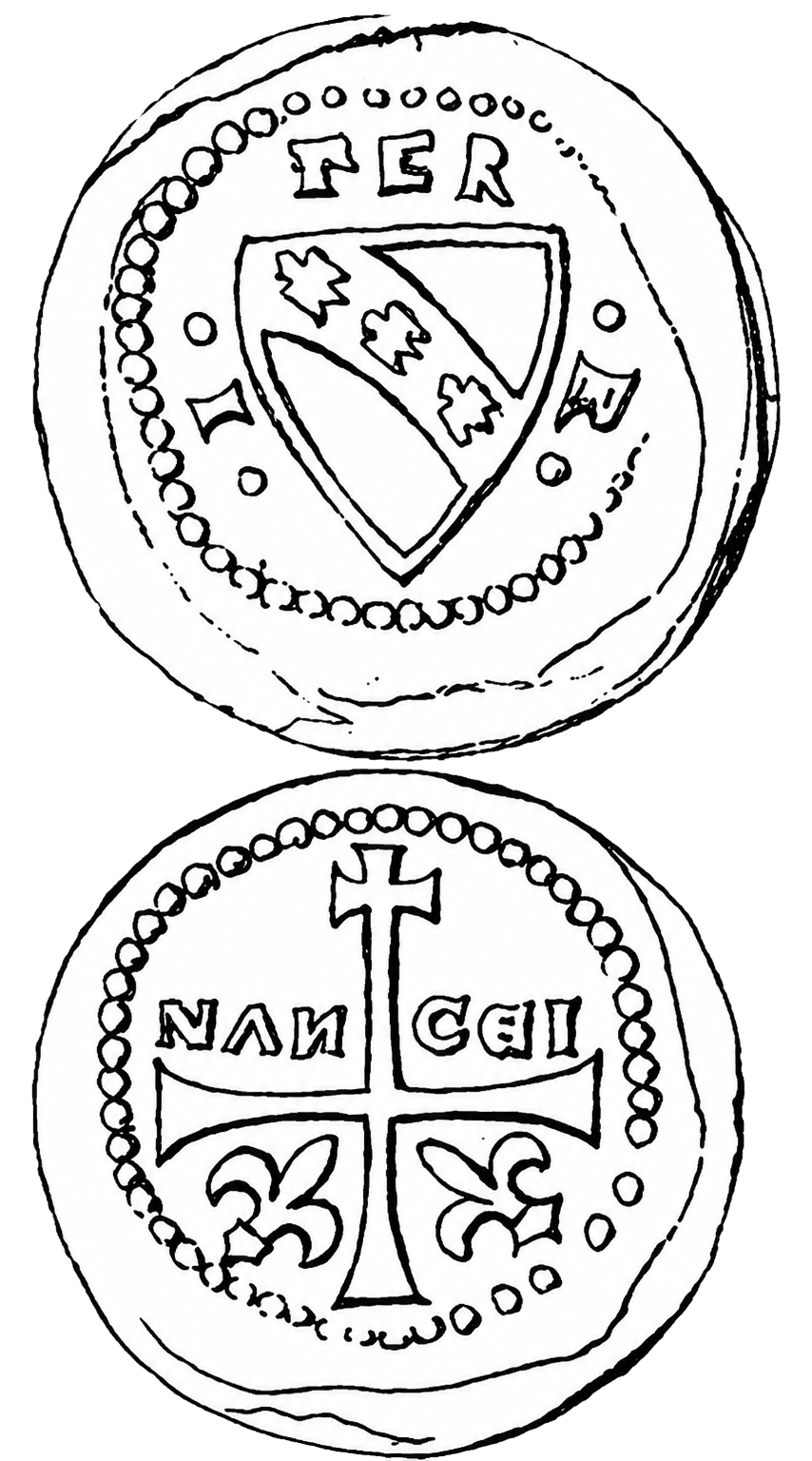
The earliest pieces conventionally assigned to Ferry III are small billon deniers of Nancy bearing his name, FERRI, above the shield of Lorraine, with a cross on the reverse whose arms terminate in recrossed heads and whose lower quarters are filled with fleurs-de-lis. The reverse legend reads NANCEI. Recorded specimens sit at around 0.758 g — light coins, thin, and usually struck a little off-centre.
Their dating relies primarily on evidence from coin hoards — most notably the Lorken find, which points to the early part of the reign. While this approach is well-founded and has stood the test of time, it must be articulated with care: the characteristics of this type align with the period of approximately 1252–1260 but are not rigidly tied to it. Hoards establish only temporal boundaries (terminus), not an exact date; a single hoard indicates only that the coin was already in circulation.
Horseman and shield

The next group marks the visual change that would define Lorraine money for the rest of the medieval period. The static shield of the first deniers gives way to an armed horseman — the duke himself, mounted and in mail — while the shield of Lorraine migrates to the reverse, encircled by NENCEI or NANCEI in its various spellings.
The weight of coins in this group falls within the same range as that of the first series (approximately 0.729 to 0.758 g); it is precisely this continuity in weight standard — along with the shared reverse design — that has led numismatists to view this group as transitional, serving as a link between the series featuring a cross ending in fleurs-de-lis and the subsequent series depicting a long sword. Unfortunately, no documents exist to establish the precise chronological sequence; conclusions are based on stylistic and weight analysis — arguments subject to revision should a new hoard be discovered.
The arm and the sword

Next comes the series of coins that brought renown to this ruler’s reign. The obverse retains the image of an armed horseman; the inscription FERI can often be seen beneath the horse. On the reverse, replacing the shield, an arm emerges from the edge of the coin’s field holding a vertically raised sword; a star and crescent (or other symbols) appear on either side of the sword, while the inscription NANCEI runs along the circumference. However, the depiction of the arm is by no means universal. On many specimens, the sword is depicted in the coin’s field in isolation — hilt-down; such coins lacking the arm image are so common that the established name for the series encompasses only a portion of its varieties. Whether we are dealing with successive stages of issue, the output of different workshops, or simply the personal preferences of die-cutters — the surviving numismatic material offers no definitive answer to this question. This is the principal coin type of Ferry III, minted over many years and surviving in a vast array of minor varieties: with or without terminal letters in the legend, with symbols shifted from one side of the blade to the other, and with the addition or omission of dots. Recorded weights run from about 0.59 to 0.76 g, a spread wide enough to suggest a long production span and more than one striking campaign.
This sword has been the subject of numerous interpretations. Nineteenth-century authors were fond of linking it to specific imperial offices and titles — a tempting proposition, given that a raised sword is a natural symbol of delegated authority. Yet, viewed within the context of the entire Lorraine coinage series, this motif appears to signify something more than a specific office: introduced under Ferry III, it persisted after his death, establishing itself as a regional symbol of ducal power. In this light, it requires no further explanation. Were it to be viewed as the mark of a formally established title, however, every coinage issue would necessitate documentary corroboration — evidence that simply does not exist.
Neufchâteau
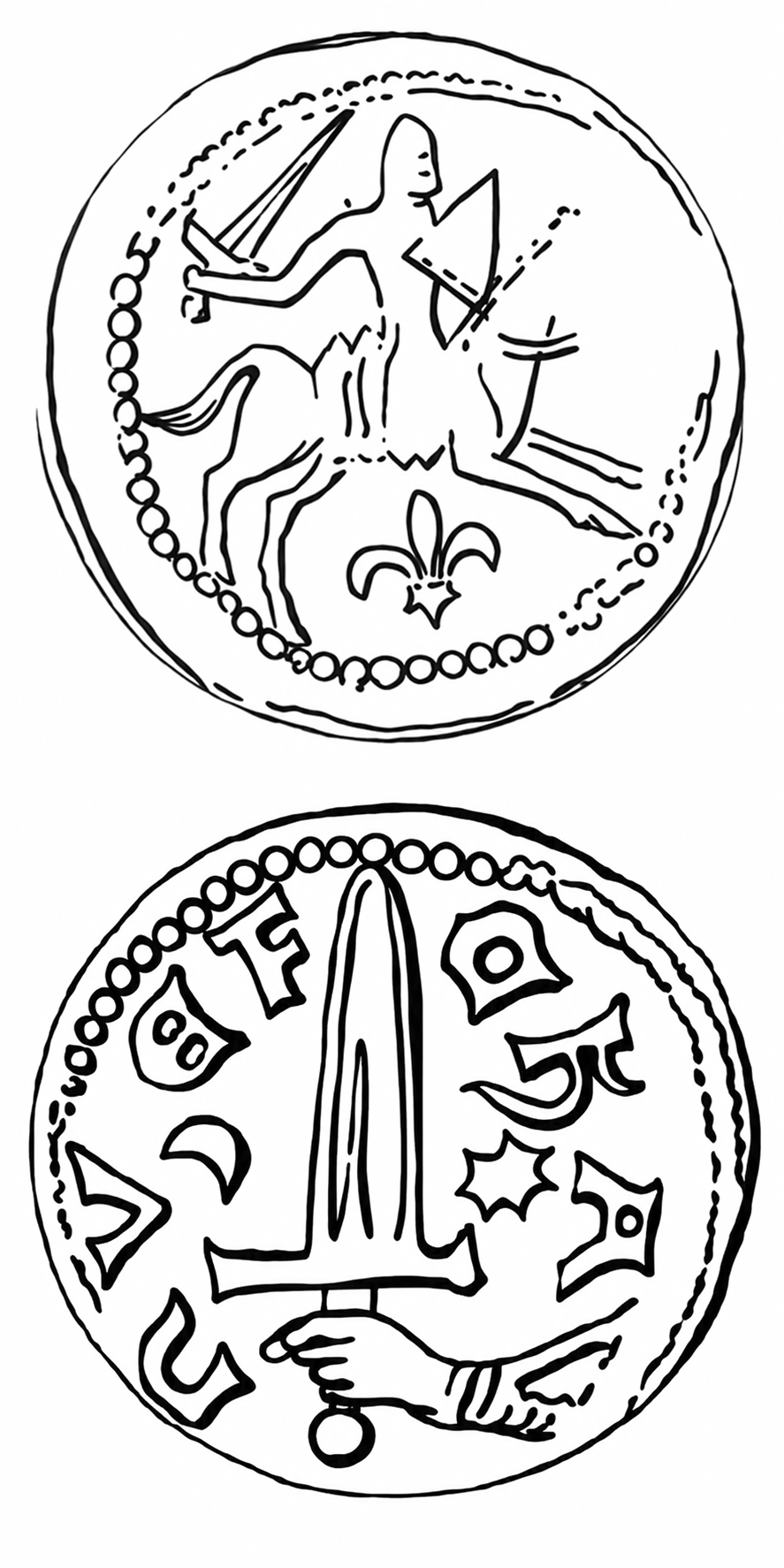
Nancy was not the only mint at work. At Neufchâteau the duke struck a closely related denier: armed horseman on the obverse, a fleur-de-lis beneath the horse, and on the reverse the same arm and sword with star and crescent, encircled by NVEFCHA and its truncations. The coins are noticeably lighter than their Nancy cousins, at roughly 0.54 to 0.65 g.
Neufchâteau’s interest is as much documentary as numismatic. The town’s standing as dower and apanage property, and the transfer arrangements of 1281, give a plausible terminus ante quem for the ducal issues — the argument advanced in the older literature and still the best one available. It should not, however, be hardened into a statement that the mint certainly fell silent in that year. A change of tenure is not the same thing as a closed mint, and no accounts survive to settle the point.
Control marks: A between dots, and AI
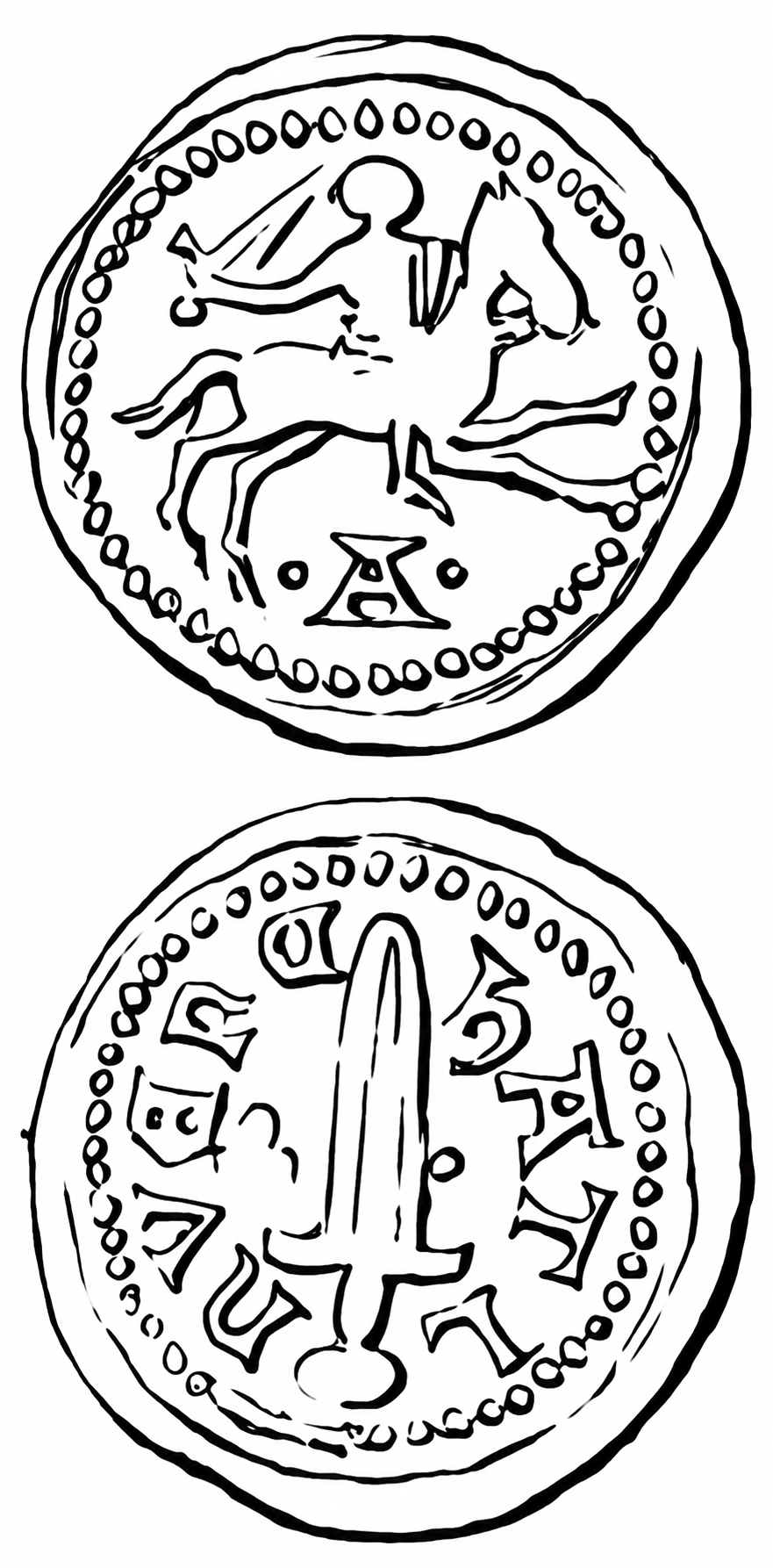
A distinct Neufchâteau subseries replaces the fleur-de-lis beneath the horse with an A flanked by two dots, or with the ligatured letters AI. Otherwise the design holds: NVEFCHAT with the sword, the blade occasionally flanked by dots. Weights, at about 0.62 to 0.73 g, sit slightly above the standard series.
These marks have generated a long trail of guesses at names — mint officials, moneyers, place-names. Modern practice is more restrained and, in the absence of evidence, more useful: they are treated as control or series marks whose meaning is unknown. The types themselves are well attested, appearing steadily in the catalogue tradition and in sale descriptions; it is only the reading of the letters that remains open.
Mirecourt, after 1284
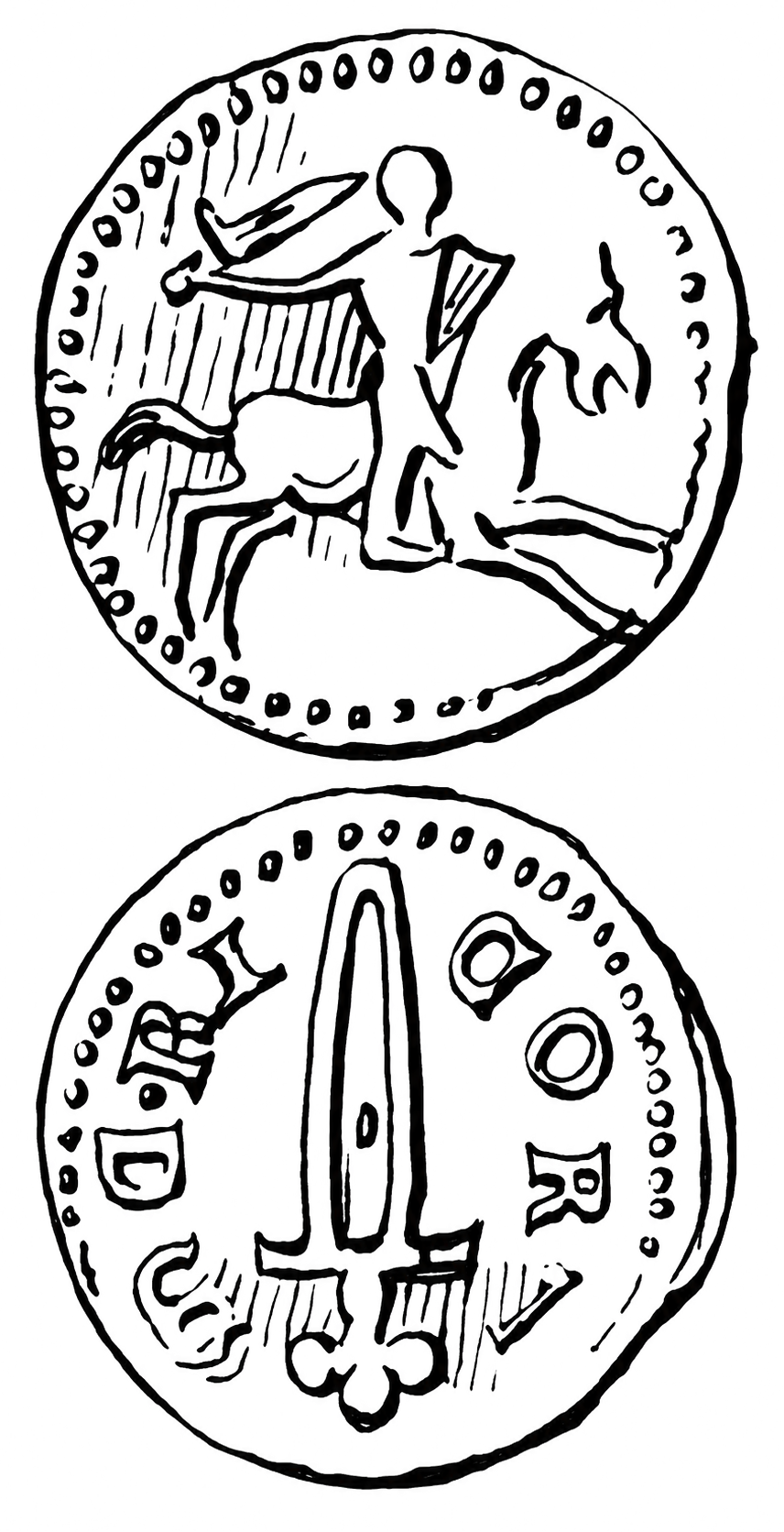
The last mint to enter the story is Mirecourt, whose deniers follow the established formula — armed horseman, sometimes with a fleur-de-lis beneath, and the sword on the reverse — but whose reverse legend appears in an unusually unstable set of spellings: MVRICORT, MERICORT, MYRICORT. These are the lightest coins of the reign, at roughly 0.43 to 0.54 g, and the drift in weight is itself an argument for placing them late.
The conventional dating ties them to the change of lordship in 1284, which is a sound inference so far as it goes. Absent mint records, though, a broader attribution to the later reign is the safer position, and the one this catalogue prefers.
The duke on foot
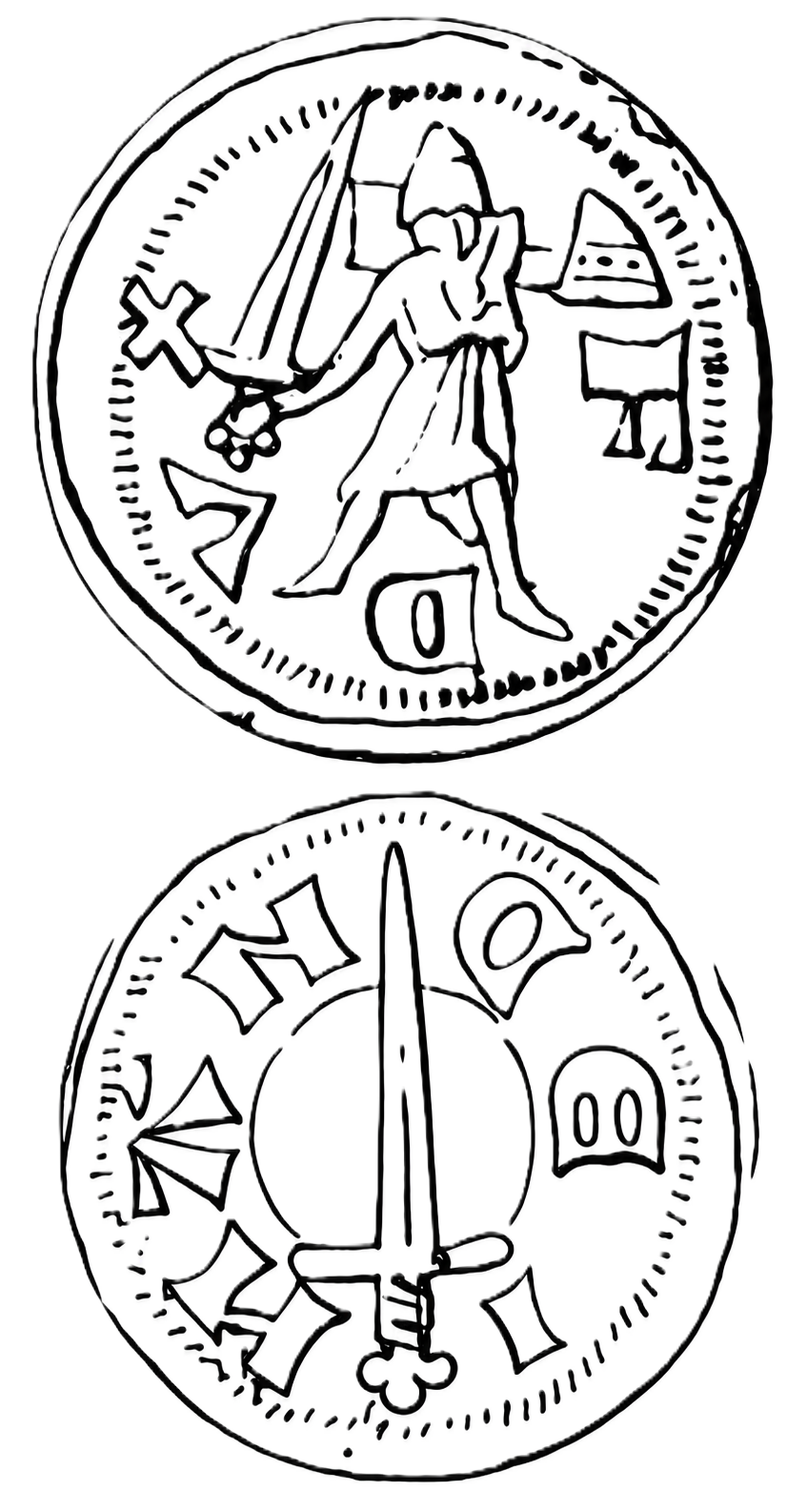
One type stands apart from everything else in this corpus, and its place in the reign has only recently been argued for. The obverse abandons the horseman altogether: the duke stands on foot, covering himself with his shield and holding a sword, with the short legend F. DVX. The reverse keeps the sword and NANCEI. Saulcy recorded a weight of 459 mg, and the type appears in the catalogues as Boudeau 1459 and Roberts 9211.
Saulcy gave the coin to Ferry IV, placing it accordingly in his Plate III. The modern reattribution rests on an outside witness rather than on the coin itself: an imitation of the type is known to have been struck by Gaucher de Châtillon at Vaudémont in 1301, and a copy cannot precede its model. If the imitation is correctly dated, the prototype must belong to the final years of Ferry III rather than to the reign of his grandson, and the type is now placed at approximately 1300–1303. The argument was set out by Jean Elsen in 2017, and it parallels Flon’s reassignment of Saulcy’s Plate II ##1 and 2 to the same reign.
The reasoning deserves the same scrutiny applied to the Sierck coins earlier in this catalogue. Both rest on deductions rather than on documents. The strength of this case lies in the dated imitation, which is a firmer thing than stylistic differences between reigns; its weakness is that it depends entirely on that date being right, and on the Vaudémont piece copying this type rather than a common ancestor of both. The attribution is adopted here as the better-supported of the two, not as a settled fact.
Ghosts in the cabinet
The final group of types deserves special mention precisely because they should not simply be lumped together with the others. Nineteenth-century literature contains descriptions of types known only from engravings — such as depictions of imperial eagles, anomalous legends, or initials (like F.D.) deciphered from worn or damaged specimens. Some of these may well turn out to be genuine. Others, however, almost certainly fall into the category of so-called “cabinet ghosts” — misread legends that migrated from one publication to another until they acquired the status of actual types.
The golden rule of numismatics applies here: such types are considered unconfirmed until an actual specimen is found and examined. They are worth mentioning, as the existence of doubt is a necessary prerequisite for subsequent verification; however, they should not be listed in catalogues as real coins.