
Research · Browse
By mint
The mints of the duchy, in the order they enter the story.
Dates are inferences from territorial transfers, not mint records, and each is given with the argument it rests on.
Nancy
Legends: NANCEI, NENCEI
Nancy is the mint against which the others are measured. The town had been assigned as dower to Gertrude de Dagsbourg on Matthew II’s accession and returned to the duchy on her death in 1225, leaving the duke a full quarter-century of undisturbed possession — and the coinage shows it. Symbols beneath the horse shift from one striking to the next, the reverse legend appears in abbreviated, blundered and irregular forms, and letter shapes drift: the ordinary signature of a mint working over many years rather than in a single campaign.
It is also the mint that speaks. A number of Matthew’s varieties carry a Gothic M beneath the horse, universally read as an abbreviation of Mahus, the vernacular form of the duke’s name; under Ferry III the legend FERI appears beneath the horse on the principal series. Elsewhere the coinage identifies a place and leaves the ruler to be inferred.
The types struck here run from the early deniers with the shield and a fleur-de-lis cross, through the horseman-and-shield transitional group, to the long-lived horseman and sword that defined Lorraine money for the rest of the medieval period.
-
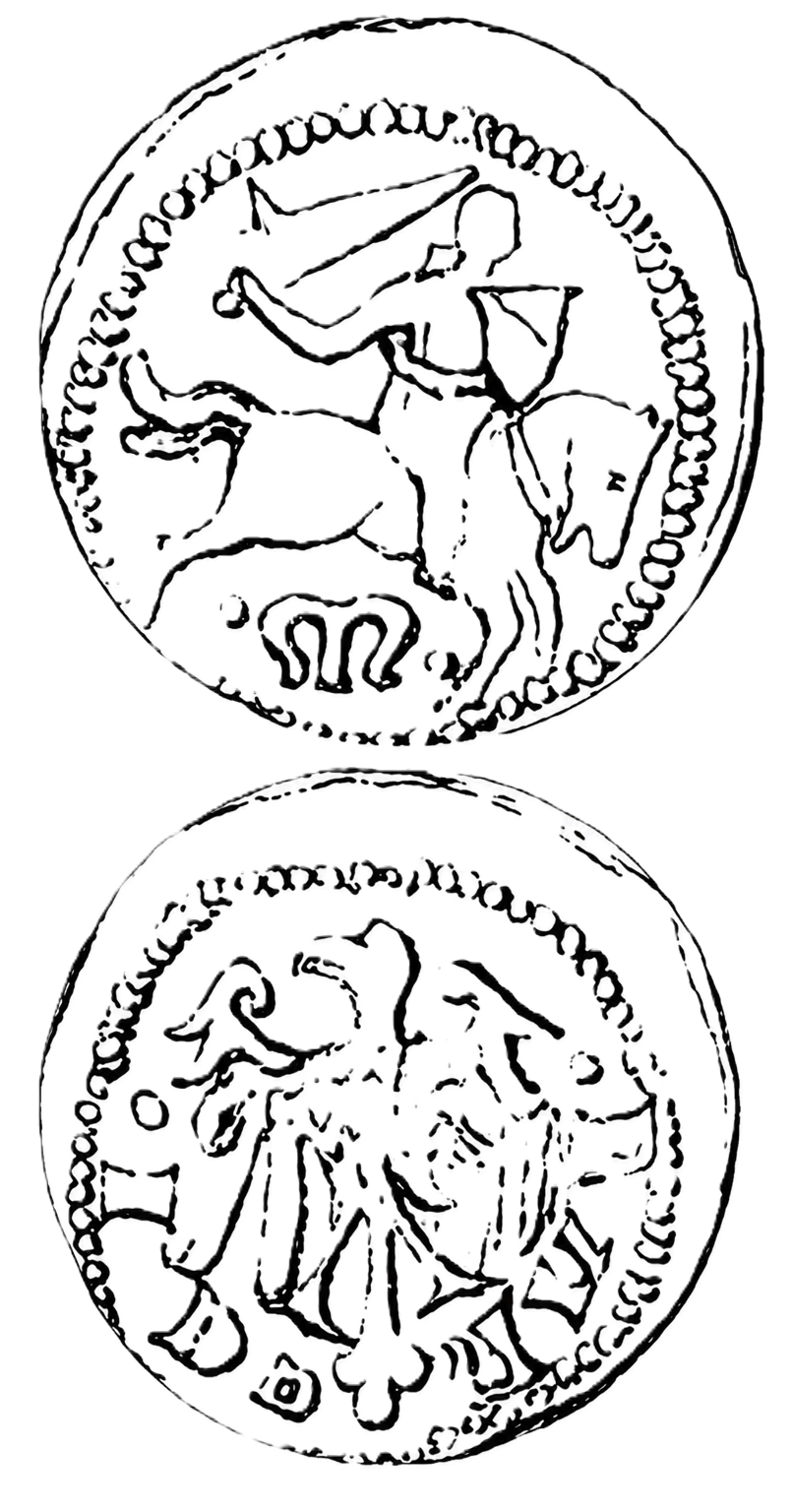
Denier of Nancy: horseman and eagle
The one Nancy issue whose attribution needs no scaffolding: an armed horseman with a Gothic M beneath, and an imperial eagle on the reverse. Highly various, as a mint working continuously for a quarter-century would be.
-
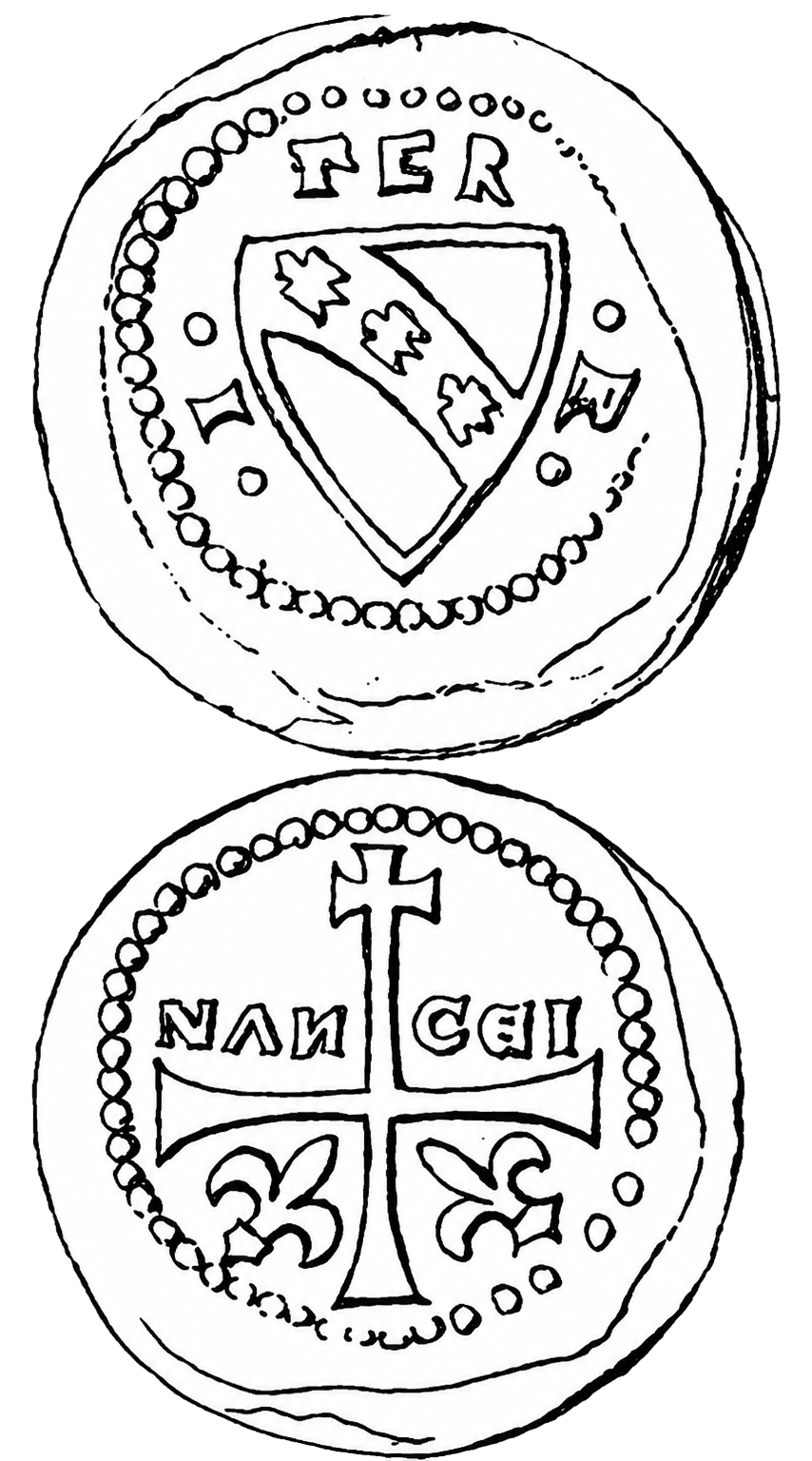
Denier of Nancy: FERRI above the shield
The earliest pieces conventionally given to Ferry III: his name above the shield of Lorraine, and a cross with fleurs-de-lis in the lower quarters. Light, thin, and usually struck a little off-centre.
-
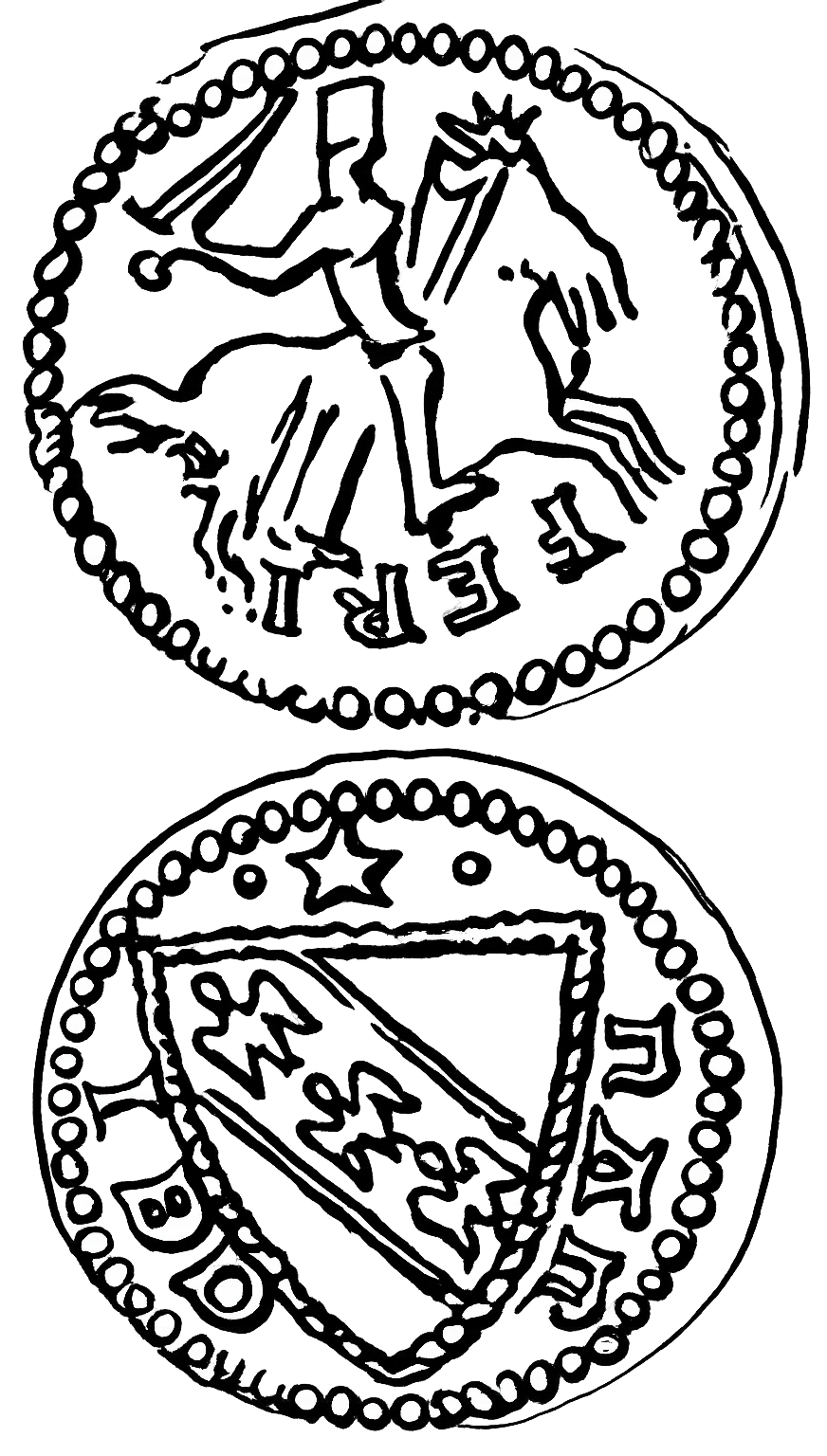
Denier of Nancy: horseman and shield
The visual change that would define Lorraine money for the rest of the medieval period: the static shield gives way to an armed horseman, and the shield migrates to the reverse.
-

Denier of Nancy: horseman, arm and sword
The principal type of the reign, struck over many years and surviving in a vast array of minor varieties. On many specimens the sword stands alone in the field, without the arm the series is named for.
-
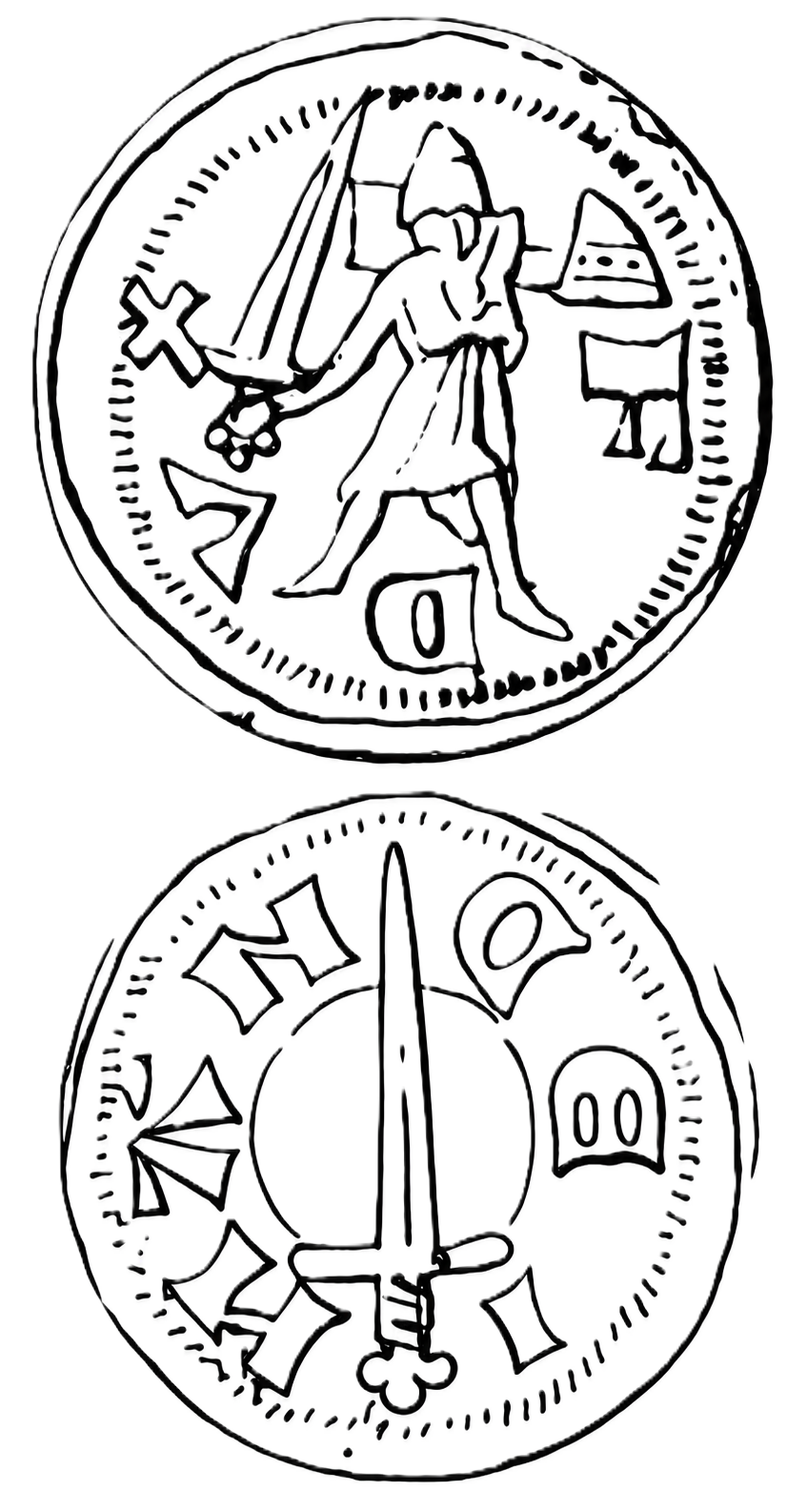
Denier of Nancy: the duke on foot
One type stands apart: the duke on foot, covering himself with his shield. Reassigned from Ferry IV on the evidence of a dated imitation, and placed at roughly 1300–1303.
Thionville 1225–1226
Legends: TIONVILLE
Thionville came to Matthew II in 1225 through his marriage to Catherine of Limburg, daughter of Waleran III of Limburg and Ermesinde, Countess of Luxembourg. The union granted access to Luxembourgish territories but brought no revenue with them: the lordship passed with the title and without the income, and Matthew, treating it as a burden rather than an asset, gave it up almost at once.
He struck coins there regardless, and that is the point of interest. Deniers bearing the legend TIONVILLE survive from this short possession, and because the period is bounded at both ends by datable events, they can be placed more precisely than almost any other issue of the reign. The brevity explains their rarity.
It also says something about why the dukes struck at all. Coinage began immediately on acquisition and stopped on relinquishment, which is what one would expect if the minting was an assertion of rights rather than a commercial venture.
Bounded by events rather than by mint records: Matthew II's marriage to Catherine of Limburg in 1225 brought him the lordship, and he relinquished it almost immediately. The dates are as firm as this catalogue gets, but they are the dates of the tenure, not of documented striking.
-
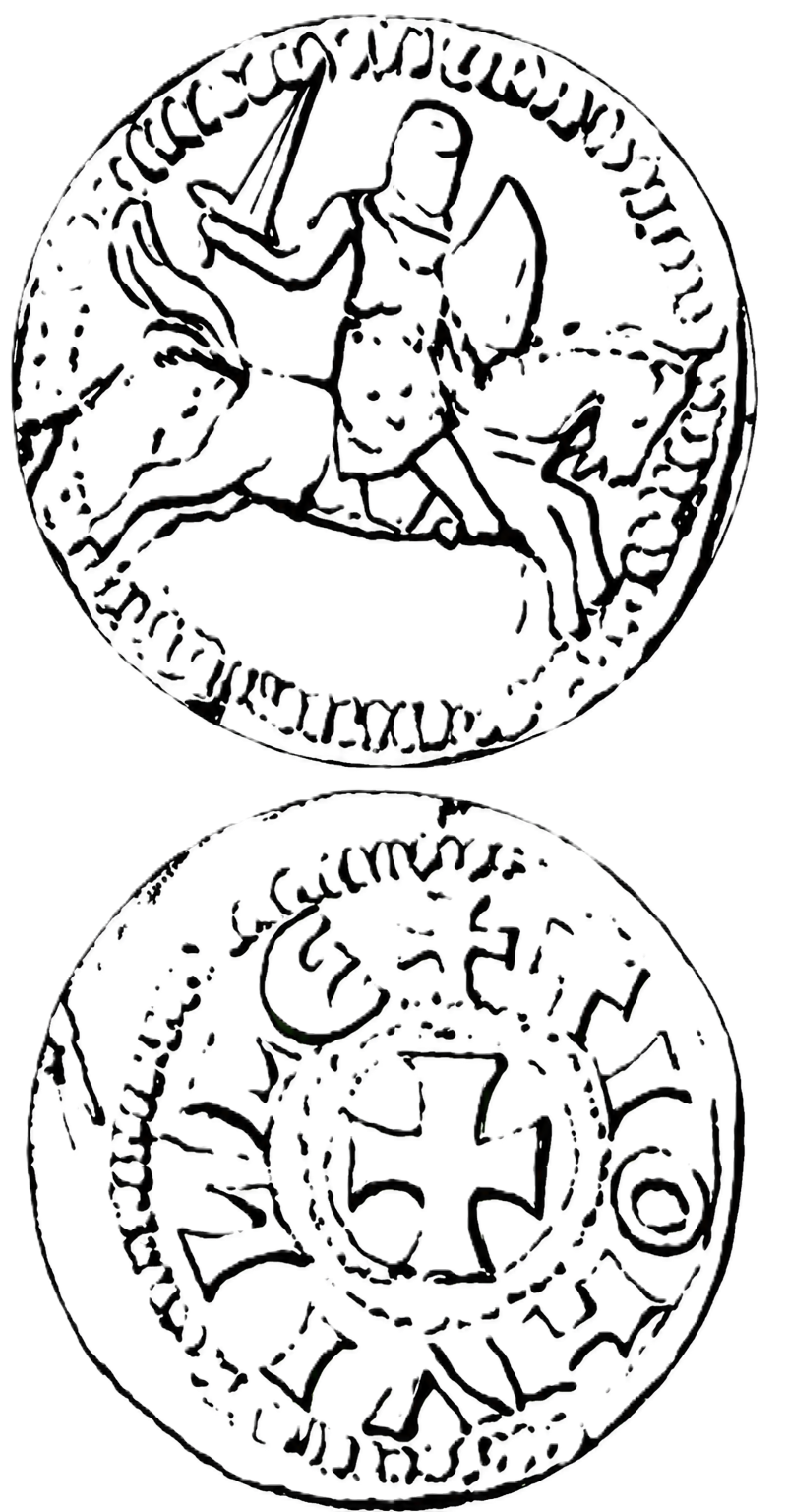
Denier of Thionville: horseman and cross
Among the rarest coins in the series, and the most precisely datable: struck during a possession lasting little more than a year, 1225–1226.
Lunéville from 1243
Legends: LINIVIL, LINIVILE
Lunéville came to the duchy by force. Hugues II, Count of Lunéville, spent his years in conflict with Matthew II, was defeated, and surrendered his county; an exchange of lands settled the matter, and the lordship and its castle entered the ducal domain in 1243.
A denier survives that fits the moment: the familiar galloping horseman, covering himself with his shield, and a reverse recorded in sale descriptions as LINIVIL or LINIVILE, accompanied on some readings by an imperial eagle. A cited specimen weighs 0.65 g.
The reading is not beyond dispute. The name has occasionally been claimed for Ligniville, and the possibility cannot be dismissed outright — medieval mint legends are abbreviated to the point of ambiguity, and this one is shorter than most. Lunéville remains much the better candidate: it was acquired at a datable moment, it was a place of real consequence with a fortress the dukes would hold for the rest of the Middle Ages, and it fits the pattern followed at Thionville and Sierck. But the alternative is on the record, and it is recorded here rather than quietly dropped.
The county entered the ducal domain in 1243, which gives a terminus post quem and nothing more. No record survives of when striking began or ended; the attribution to this reign rests on the established pattern of answering an acquisition with a coin.
-
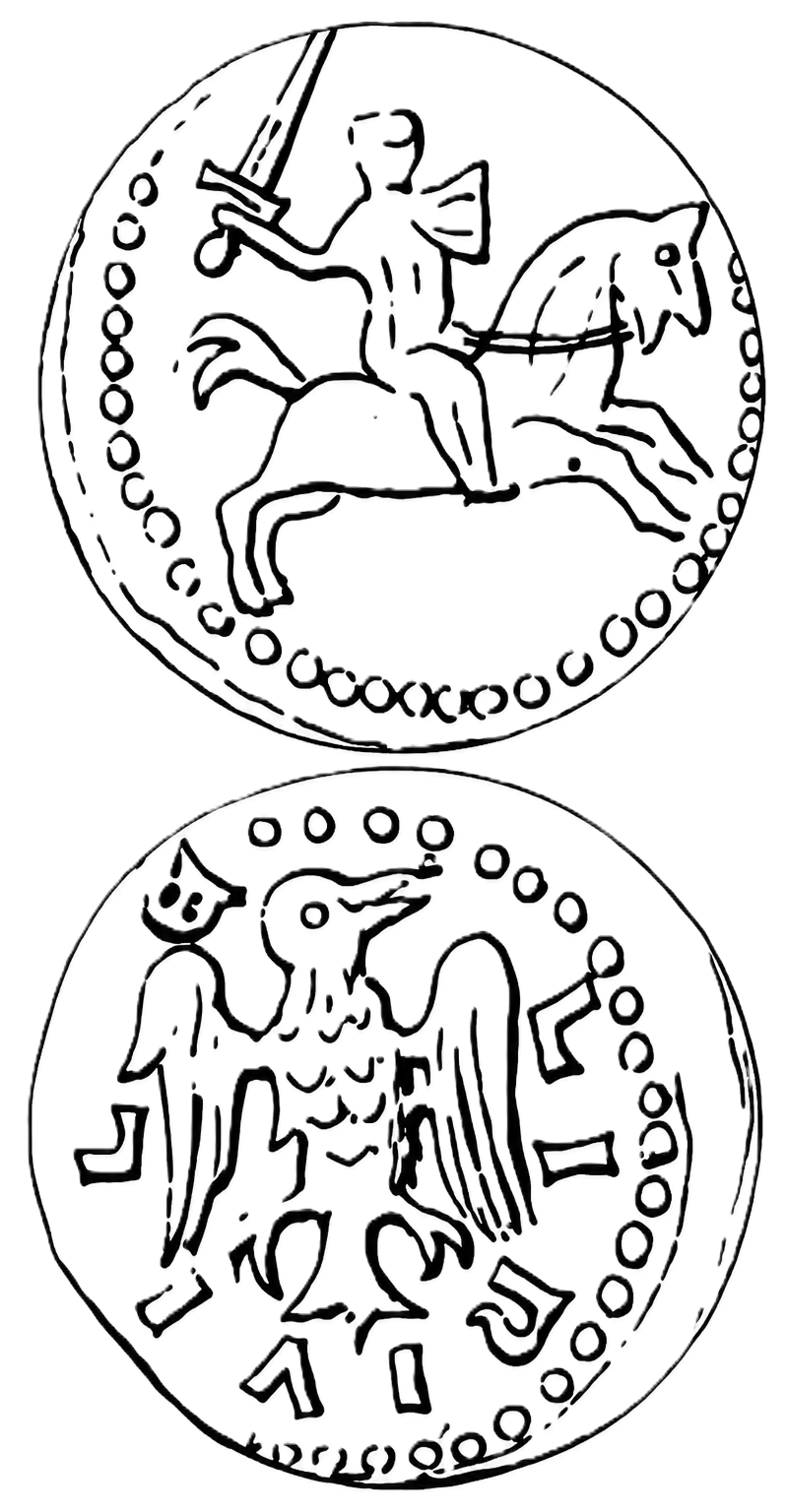
Denier of Lunéville: horseman and eagle
The galloping horseman covering himself with his shield, and a reverse recorded as LINIVIL or LINIVILE. The reading has occasionally been claimed for Ligniville rather than Lunéville.
Sierck from 1247
Legends: CIRKES
Sierck came into the dukes’ possession in 1247, and the deniers legended CIRKES refer unambiguously to the town on the Moselle — an attribution proposed by de Saulcy and firmly established in the cataloguing tradition. Local tradition at Sierck records that its ducal mint was one of five operating during Matthew II’s reign. Several varieties survive, and the scale of production points to a substantial workshop rather than a symbolic or trial issue.
The mint matters out of proportion to its size because of what is disputed here. The horseman-and-cross denier — an armed horseman galloping right with a shield, the reverse bearing .CIRKES around a cross pattée with pellets in the angles — was given by de Saulcy to Matthew II on the reasoning that the town passed to the duke in 1247 and that the duke struck coins in his new territories. Modern catalogues disagree: Flon assigns the type to Ferry III, and it appears as Boudeau 1455 and Flon 51, 53 (pp. 297–298), at about 0.60 g.
Neither side has conclusive evidence. The 1247 transfer establishes only that the coin cannot be earlier; it does not show that it must precede February 1251. Matthew had four years to organise minting; Ferry III had fifty-two, and the mint demonstrably continued under him. Probability and style both favour the son — the horseman resembles Ferry III’s imagery more than the Nancy horsemen of the 1230s — but this catalogue records the disagreement rather than settling it.
A later variety substitutes a shield charged with an eagle for the standard reverse. Since the shield appears consistently on Ferry III’s early coins, these are generally read as transitional between the two reigns. The conclusion rests on stylistic analysis and is tentative; a hoard could confirm or overturn it.
Sierck coins were also forged. A known counterfeit copies the ducal type closely but misspells the legend as CIRTES, and betrays itself in the metal: low-grade billon or copper under a thin layer of silver.
The town came into ducal possession in 1247, which is a terminus post quem: it establishes only that the coins cannot be earlier. Striking continued under Ferry III, so the date bounds the start of the mint, not the reign of any particular type struck there.
-
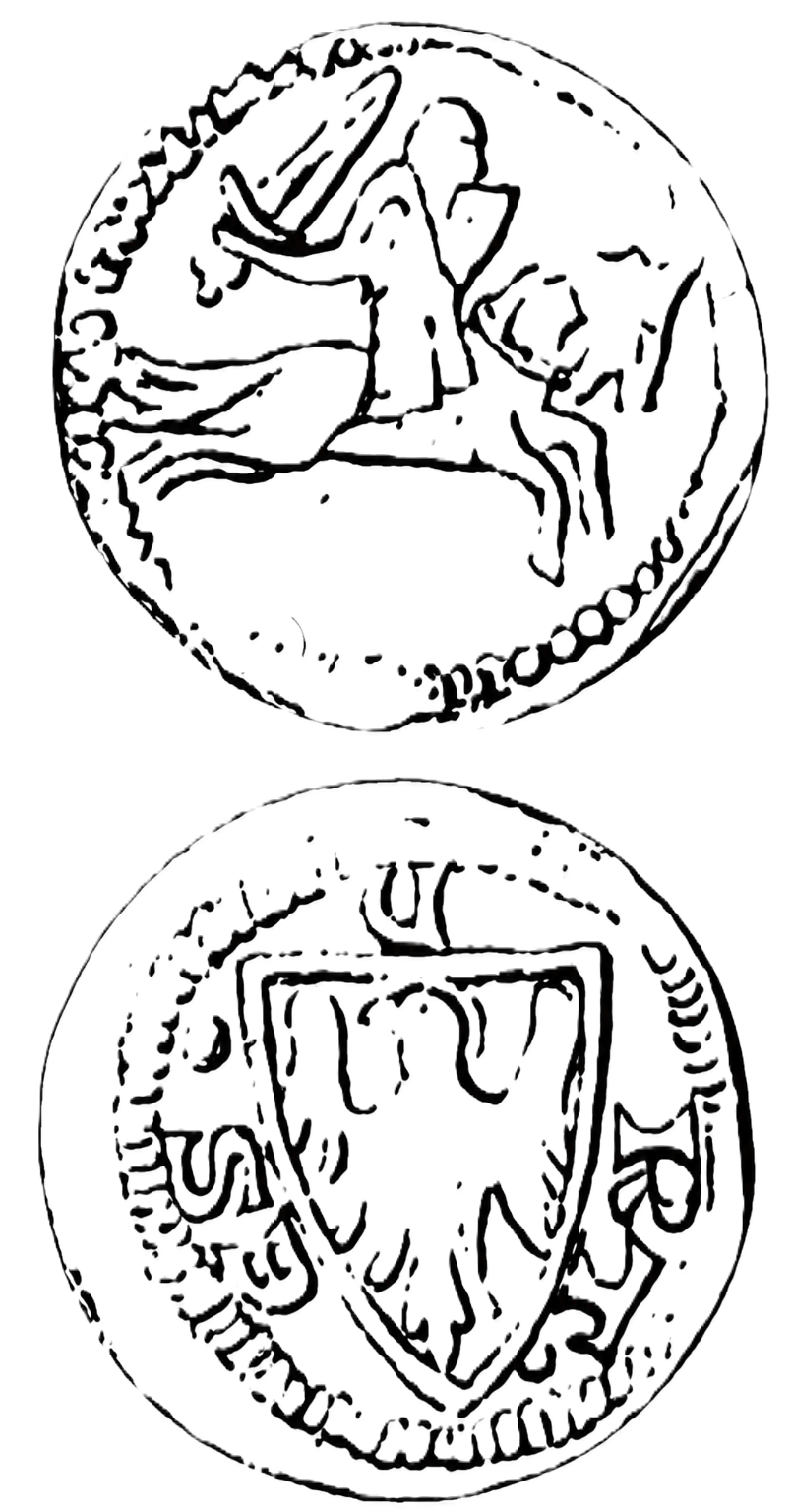
Denier of Sierck: horseman and eagle shield
An armed horseman galloping right, with a shield charged with an eagle on the reverse. Saulcy places it between Matthew II's ordinary coinage and the earliest issues of his son, at roughly 1247–1251.
-
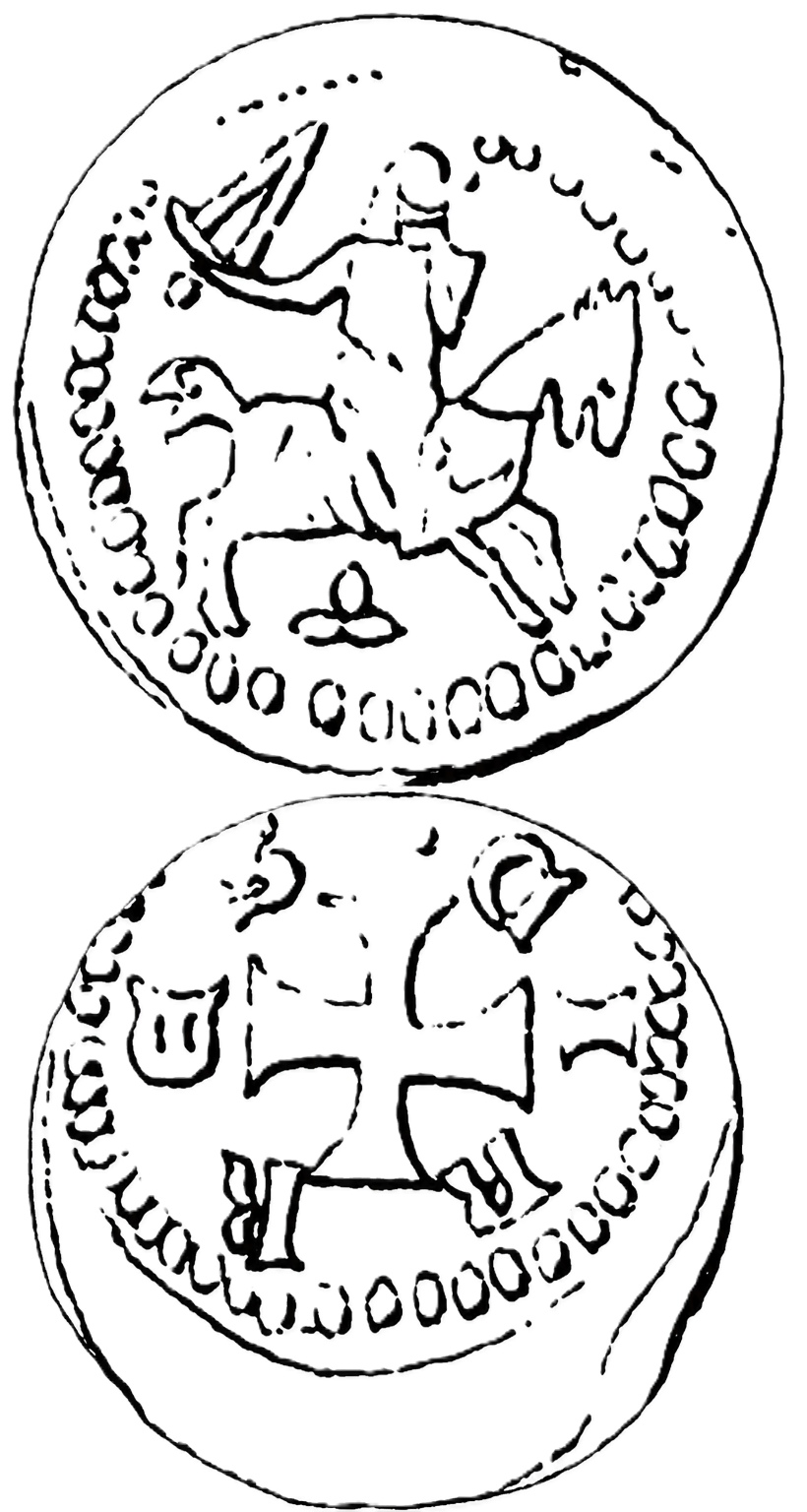
Denier of Sierck: horseman and cross pattée
The catalogue's central attribution dispute. Given to Matthew II by Saulcy and to Ferry III by modern catalogues, with neither side holding conclusive evidence. Recorded here as open.
Neufchâteau to 1281
Legends: NVEFCHA, NVEFCHAT
At Neufchâteau, Ferry III struck a denier closely related to the Nancy series: an armed horseman on the obverse with a fleur-de-lis beneath the horse, and on the reverse the same arm and sword with star and crescent, encircled by NVEFCHA and its truncations. The coins are noticeably lighter than their Nancy cousins, at roughly 0.54 to 0.65 g.
A distinct subseries replaces the fleur-de-lis beneath the horse with an A flanked by two dots, or with the ligatured letters AI. Otherwise the design holds: NVEFCHAT with the sword, the blade occasionally flanked by dots. Weights, at about 0.62 to 0.73 g, sit slightly above the standard series.
Those marks have generated a long trail of guesses at names — mint officials, moneyers, place-names. Modern practice is more restrained and, in the absence of evidence, more useful: they are treated as control or series marks whose meaning is unknown. The types themselves are well attested, appearing steadily in the catalogue tradition and in sale descriptions; it is only the reading of the letters that remains open.
The town's standing as dower and apanage property, and the transfer arrangements of 1281, give a plausible terminus ante quem. This should not be hardened into a statement that the mint fell silent in that year: a change of tenure is not a closed mint, and no accounts survive to settle the point.
-
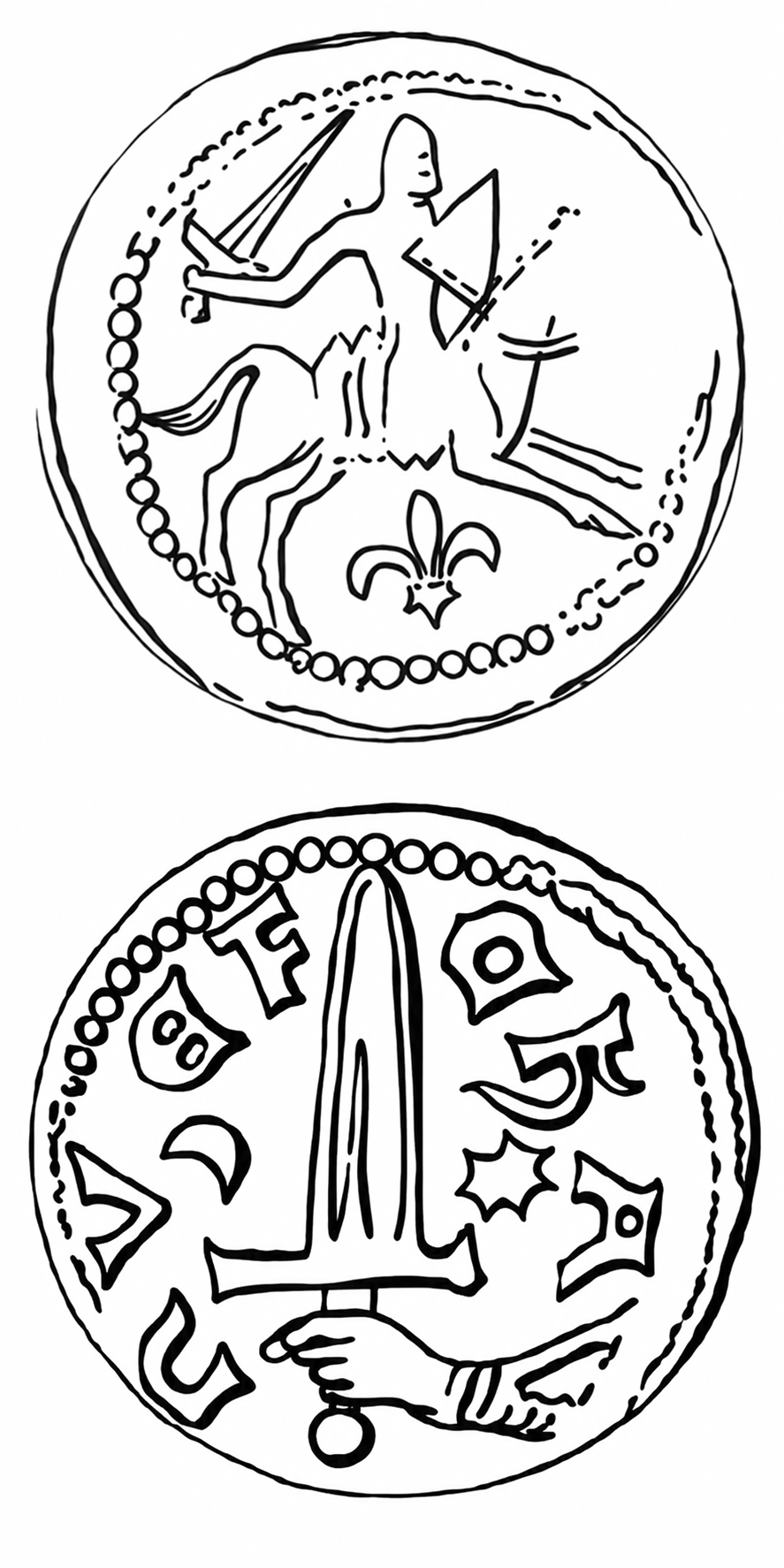
Denier of Neufchâteau: horseman, arm and sword
A close relative of the Nancy sword type, with a fleur-de-lis beneath the horse, struck on a noticeably lighter standard than its Nancy cousins.
-
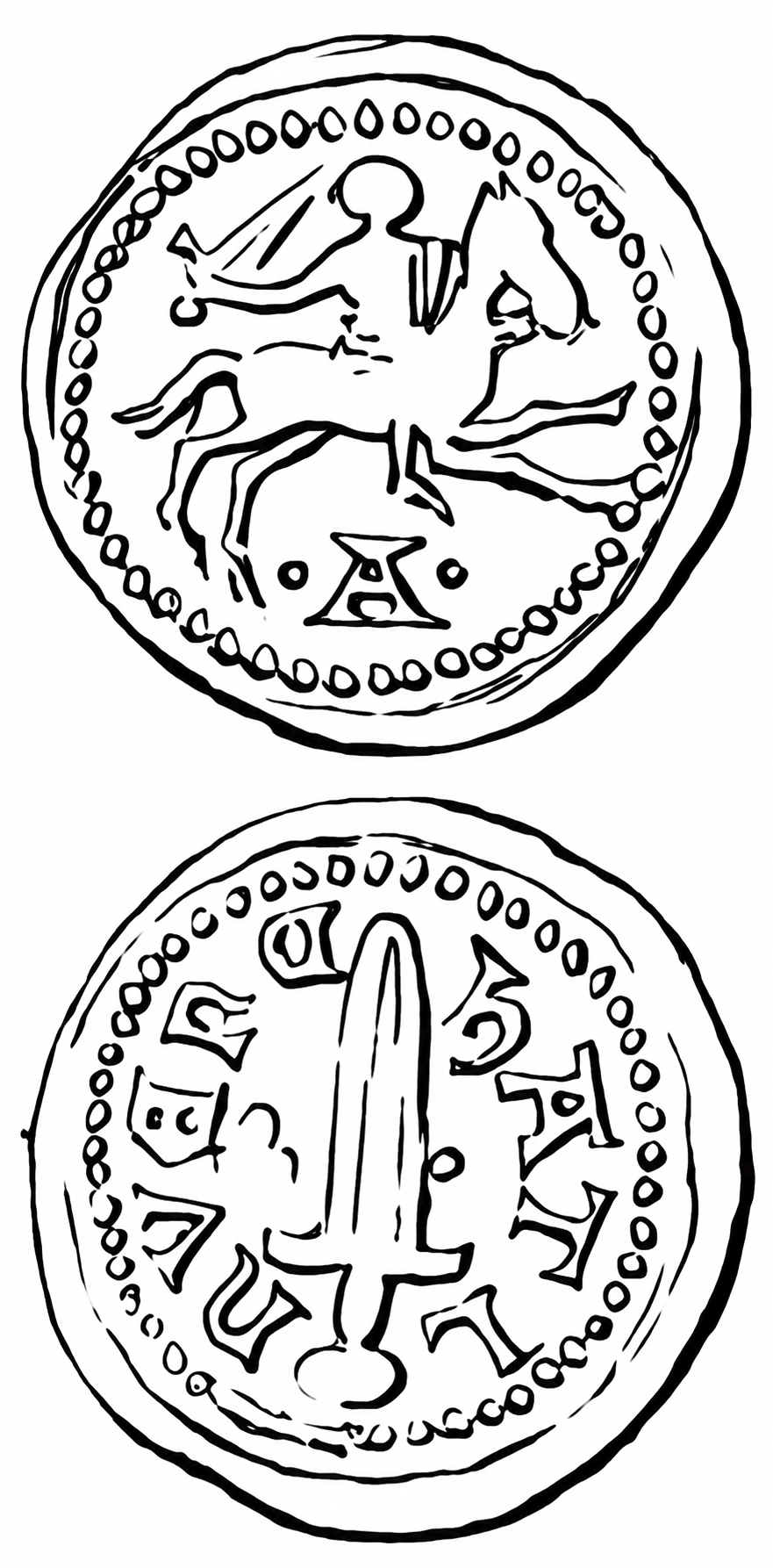
Denier of Neufchâteau: control mark A or AI
A distinct subseries replacing the fleur-de-lis beneath the horse with an A between dots, or the ligatured letters AI. The types are well attested; only the reading of the letters remains open.
Mirecourt from 1284
Legends: MVRICORT, MERICORT, MYRICORT
Mirecourt is the last mint to enter the story. Its deniers follow the established formula — armed horseman, sometimes with a fleur-de-lis beneath, and the sword on the reverse — but the reverse legend appears in an unusually unstable set of spellings: MVRICORT, MERICORT, MYRICORT.
These are the lightest coins of the reign, at roughly 0.43 to 0.54 g. The drift in weight is itself an argument for placing them late in Ferry III’s issues, though it is an argument from pattern rather than from any record of the mint’s operation.
The conventional dating ties the issues to the change of lordship in 1284, a sound inference so far as it goes. Absent mint records, a broader attribution to the later reign is the safer position, and the one this catalogue prefers; the drift in weight is a supporting argument for placing them late, not a dating in itself.
-
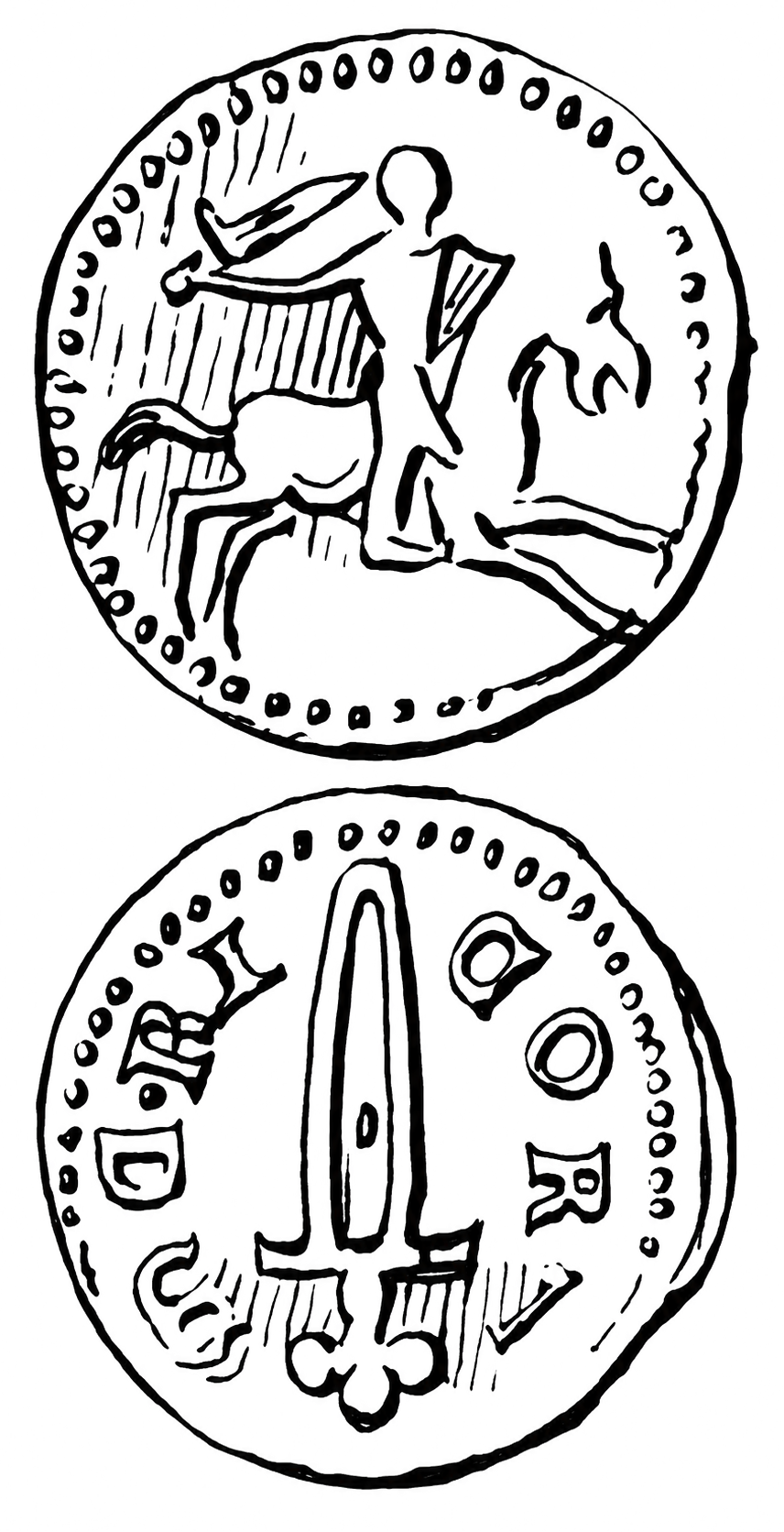
Denier of Mirecourt: horseman and sword
The lightest coins of the reign, following the established formula but with an unusually unstable reverse legend: MVRICORT, MERICORT, MYRICORT.